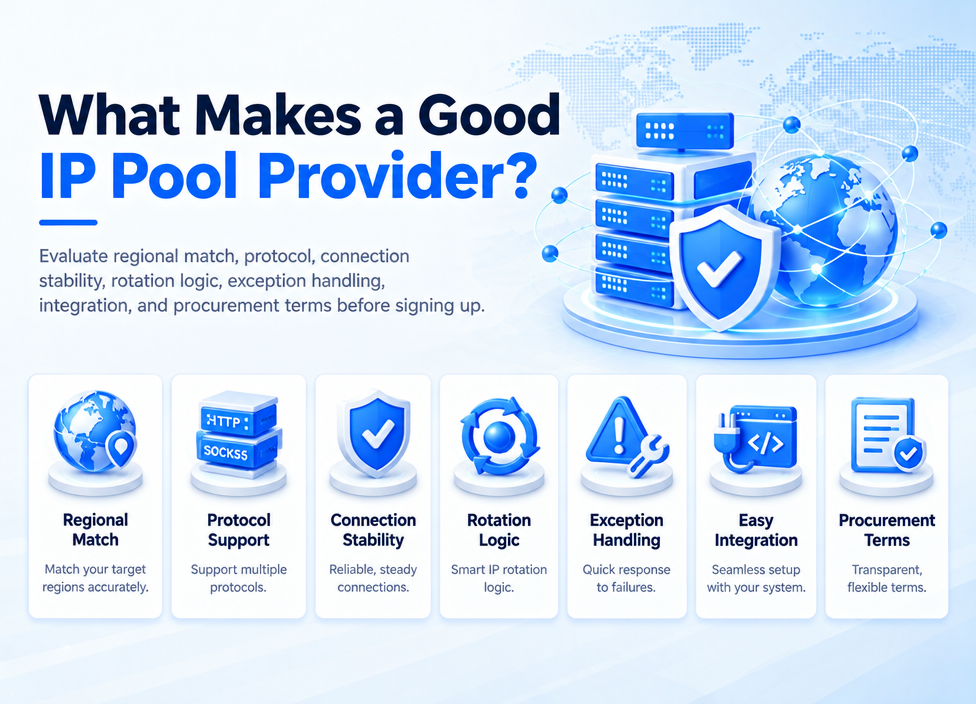
A good IP pool isn't just about resource scale. Evaluate regional match, protocol, connection stability, rotation logic, exception handling, integration, and procurement terms before signing up.
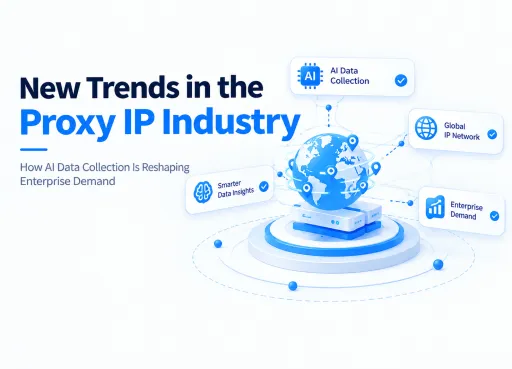
AI data collection is turning proxy IP procurement from a volume purchase into an engineering decision shaped by coverage, session control, observability, compliance, and effective data yield at enterprise scale.
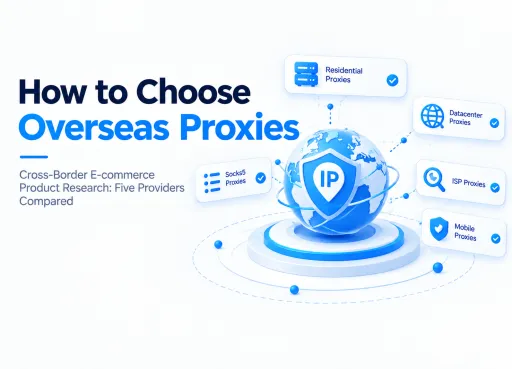
Cross-border product research depends on consistent regional access, recoverable connections, and measurable request quality. This guide compares five overseas proxy providers without treating advertised pool size as real-world stability alone.
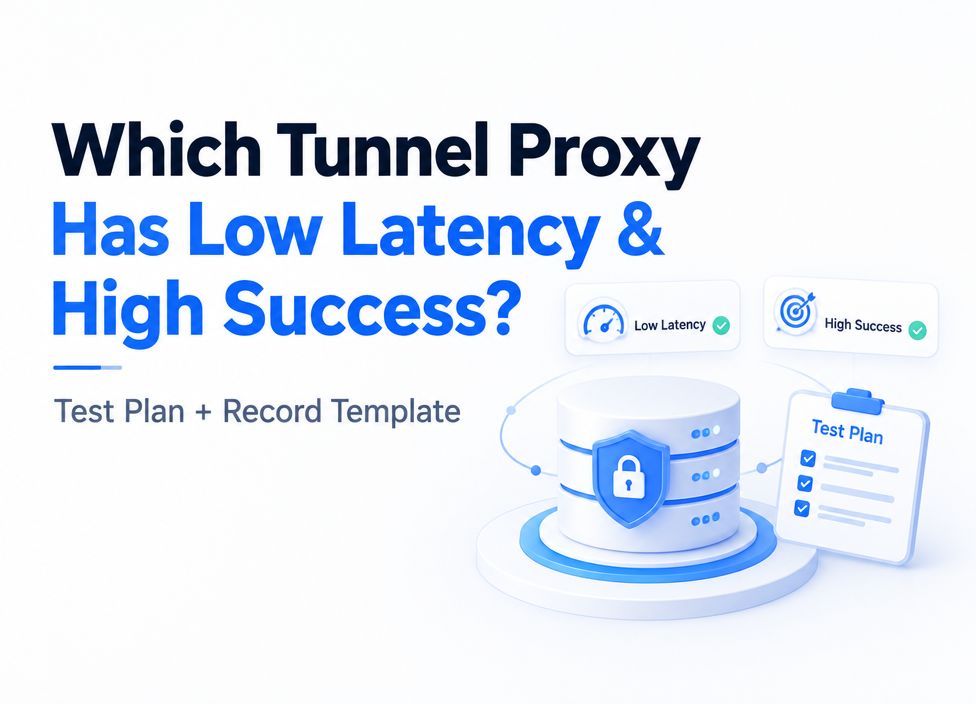
After a week of running the same script, tunnel proxy differences can't be judged by average latency alone. Compare P95, success rate, timeouts, errors, and peak variance.
Use Cases2026/10/16 100 Likes 0 Comments 614 Views
Learn how to evaluate proxy IP services using four practical metrics: stability, resource quality, request success rate, and service capability, with repeatable testing methods for confident procurement decisions in production.
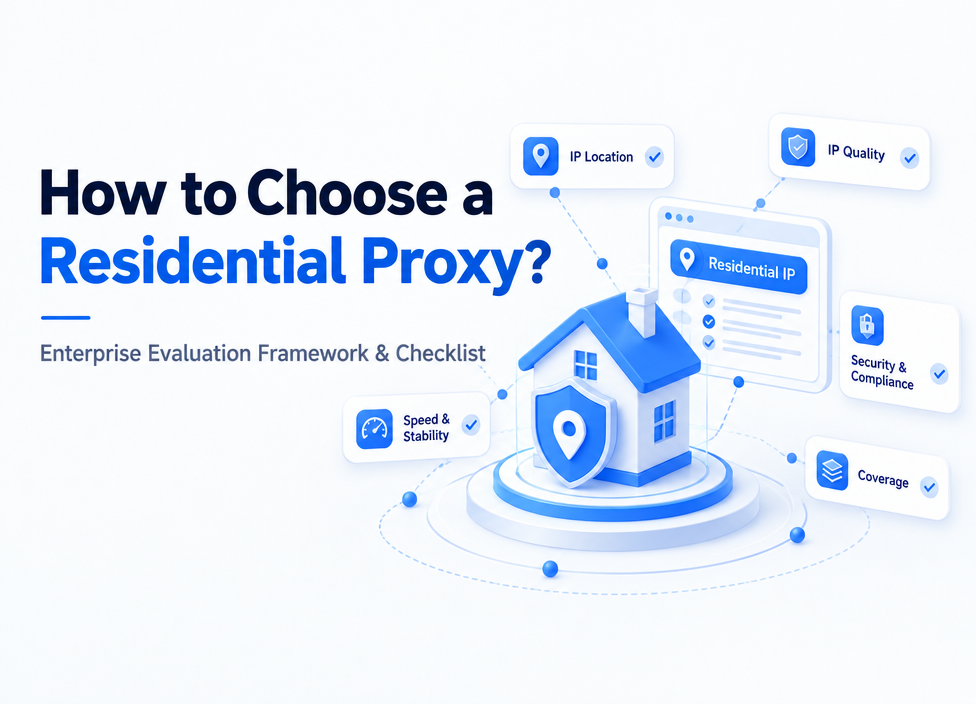
Enterprises shouldn't pick residential proxies on IP count or unit price. Evaluate across six dimensions and validate with three testing stages — compatibility, stability, and business sample.
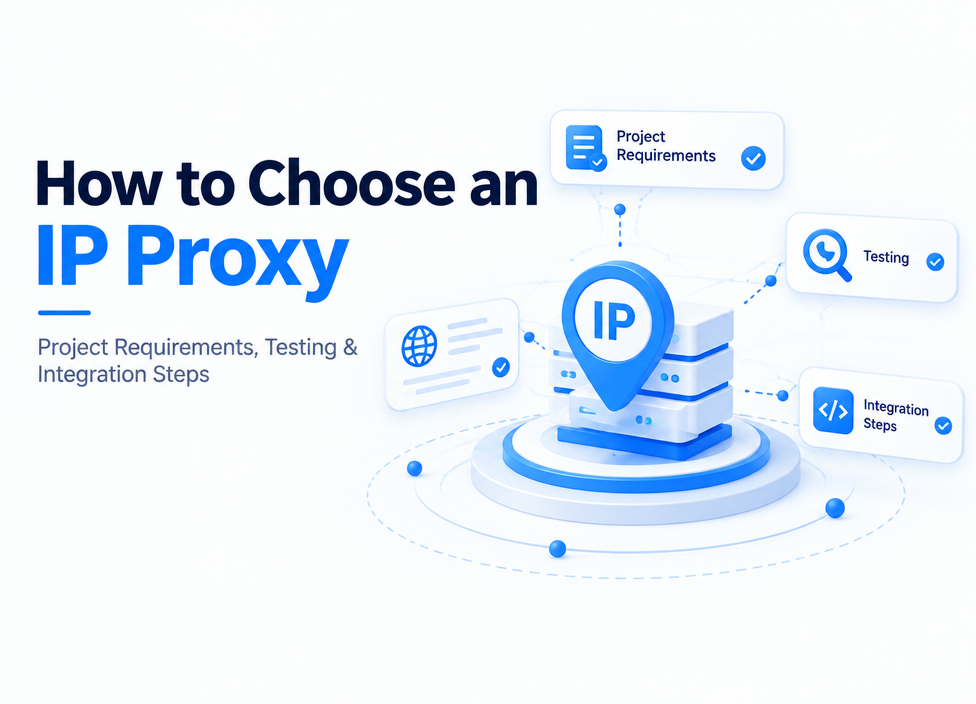
IP proxy selection isn't about price alone. Confirm access target, region, protocol, concurrency, billing, and compliance boundaries first — then validate through small-scale testing and phased integration.
The 2026 proxy market is shifting focus from node count and low pricing to source compliance, IP quality, session stability, geo precision, and auditable service.