Residential IPs that pass testing can still fail in production. The gap has 5 layers — concurrency scale, target-site policy, IP pool freshness, authentication, and network egress.
Use Cases2026/06/29 100 Likes 0 Comments 906 Views
Selecting an overseas dynamic IP provider isn't about IP pool size — it's about matching pool type and access mode to your scenario. This guide walks through super pool vs. residential pool, short-lived vs.
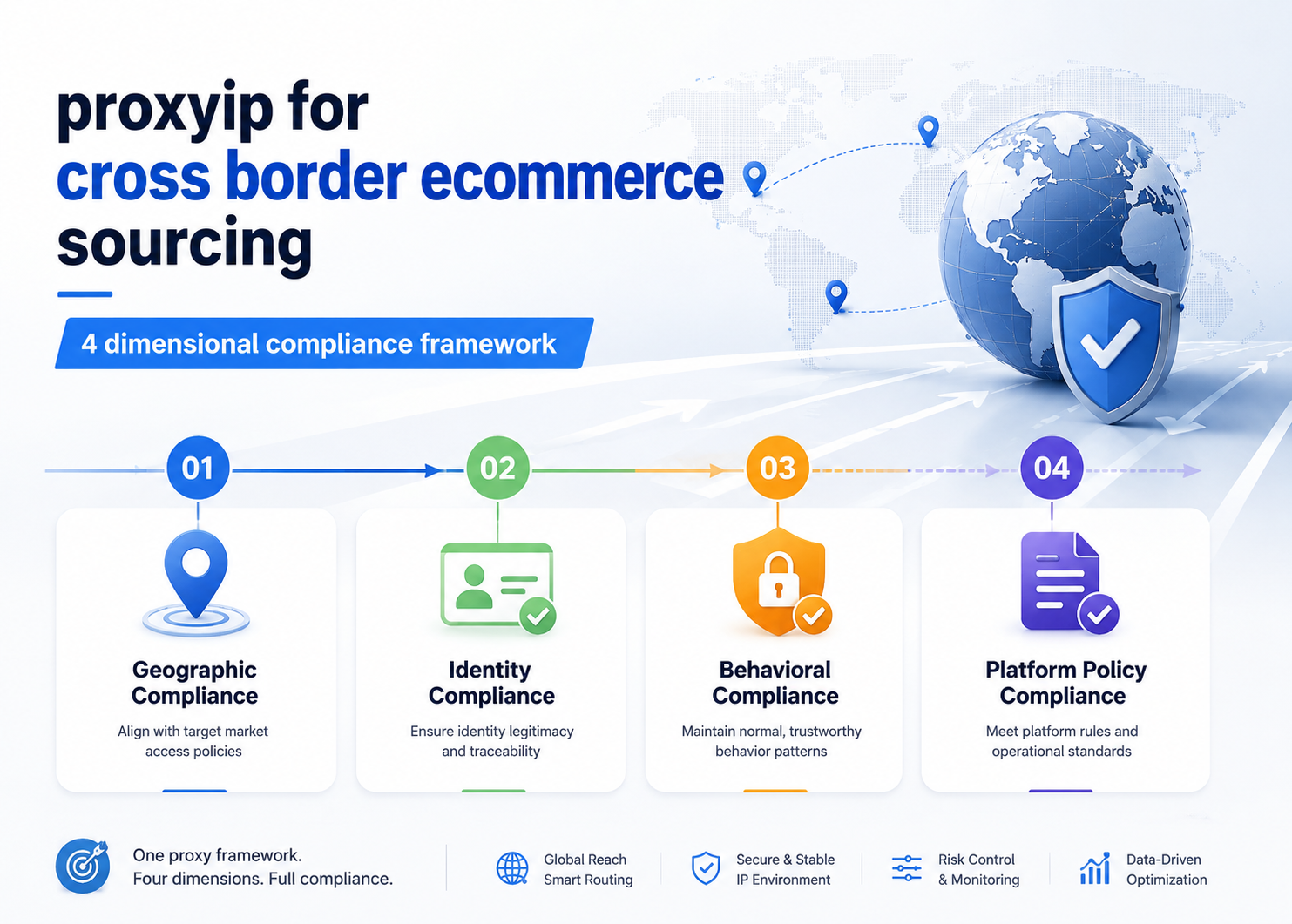
A 2026 selection guide comparing 5 overseas proxy IP providers for cross-border e-commerce — mapping sub-scenarios like sourcing, logistics, and ad monitoring to the right pool type and billing.
A scenario-based comparison of 7 emerging overseas residential proxy providers across four mechanism dimensions — integration mode, protocol coverage, billing model, and compliance credentials
Picking residential proxy nodes is more than choosing a country. This guide breaks down 5 practical decision points for cross-border scraping — geographic granularity, ISP type, protocol, IP rotation strategy, and request frequency.
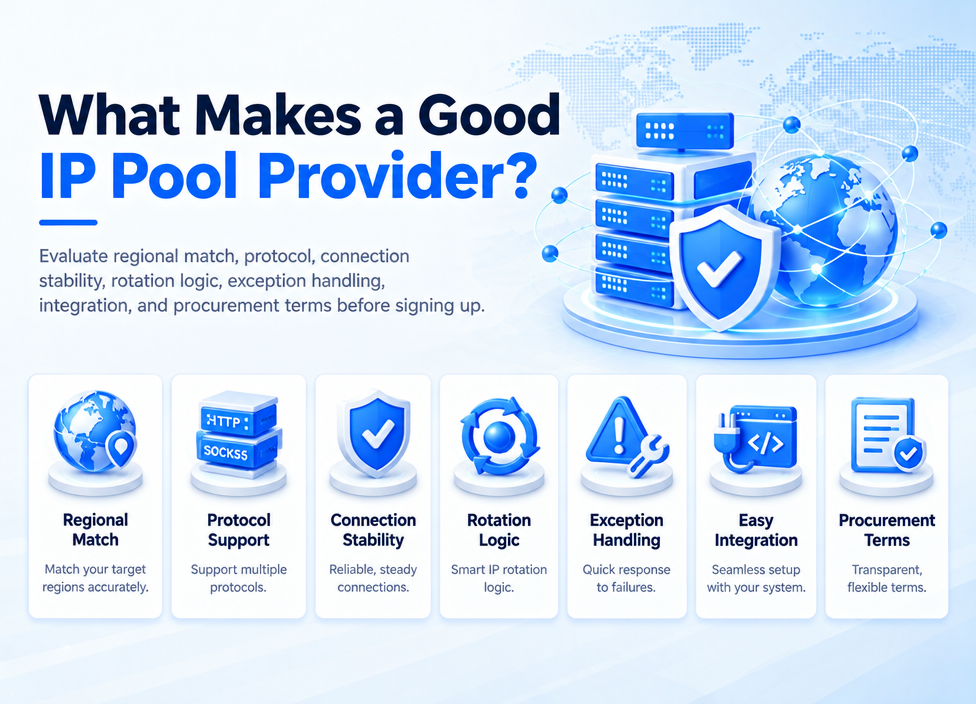
A good IP pool isn't just about resource scale. Evaluate regional match, protocol, connection stability, rotation logic, exception handling, integration, and procurement terms before signing up.
Instagram scraping errors aren't all IP problems. A layered diagnostic framework across transport, protocol, application, and data layers, covering 16 common error codes with targeted solutions.
HTTP proxy platforms have no universal answer. Domestic tasks focus on credentials, business pooling, protocols, and sustained requests; overseas tasks also weigh residential resources, regional coverage, sessions, and settlement.
Three criteria defining the top purity tier for native static residential IPs—direct ISP issuance, AS-geo consistency, and cross-database residential tagging—with a five-tier hierarchy for benchmarking.