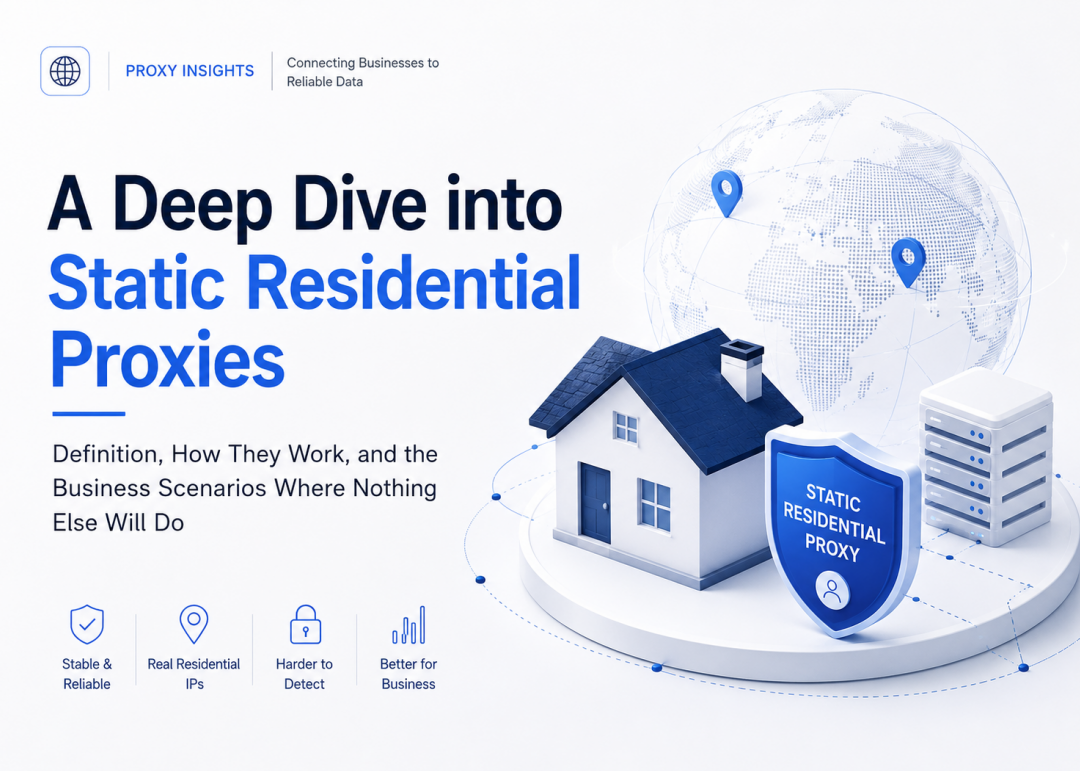
Static residential proxies combine real-ISP authenticity with month-long IP stability — irreplaceable for long sessions, audit-traceable queries, and platforms that block datacenter IPs.
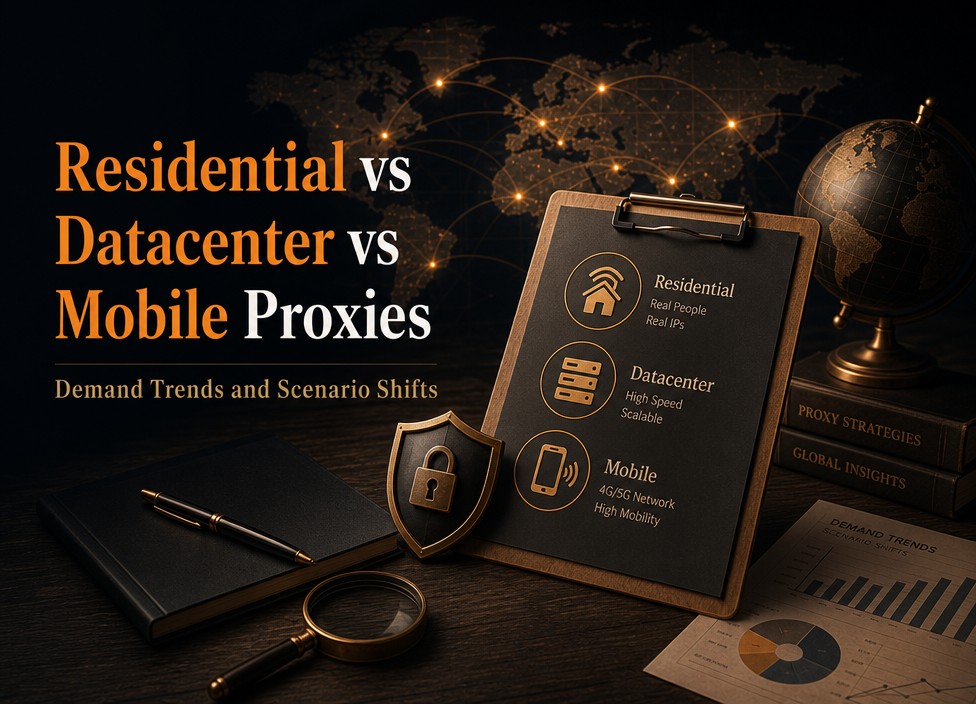
Residential IP demand keeps rising on compliance and access-isolation needs; datacenter IPs remain essential for throughput; mobile IPs are shifting from edge use to mainstream.
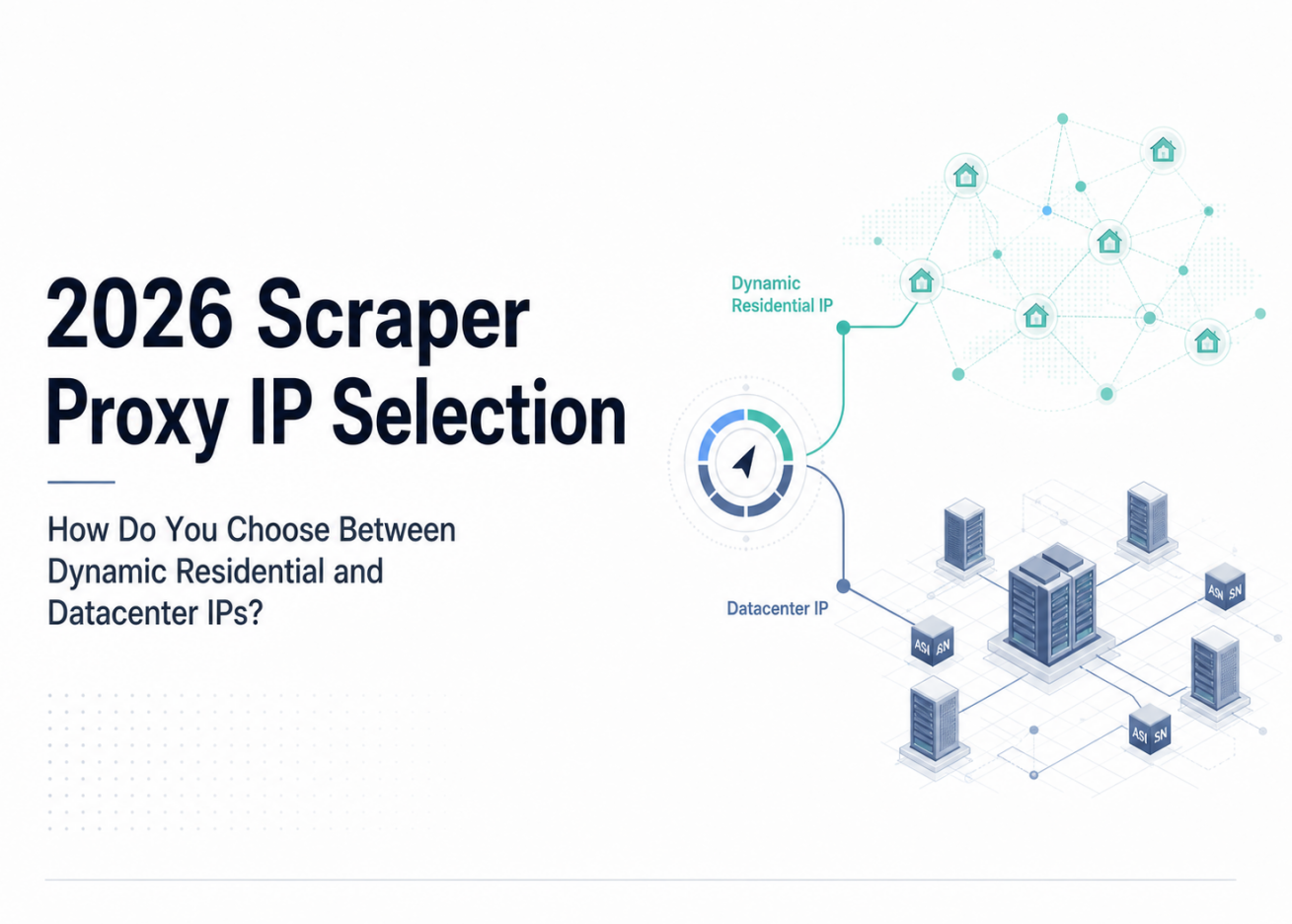
How to choose between dynamic residential and datacenter proxies for scraping—scenario-fit analysis across four dimensions, plus a hybrid architecture that cuts cost 60-70%.
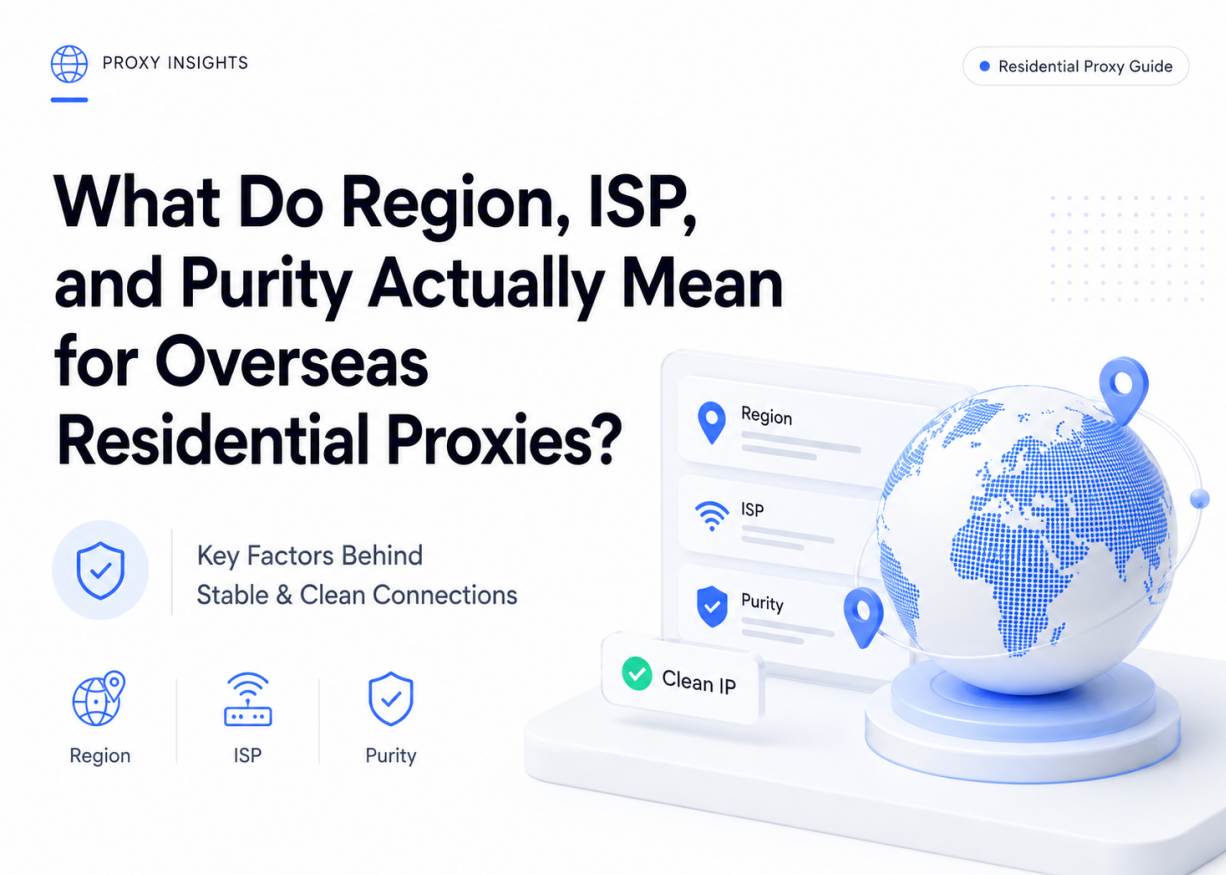
Stop comparing residential proxy providers on IP pool size alone. Region, ISP, and purity are the three layered filters that actually determine whether an IP works for your task — and what to ask during selection to verify each one
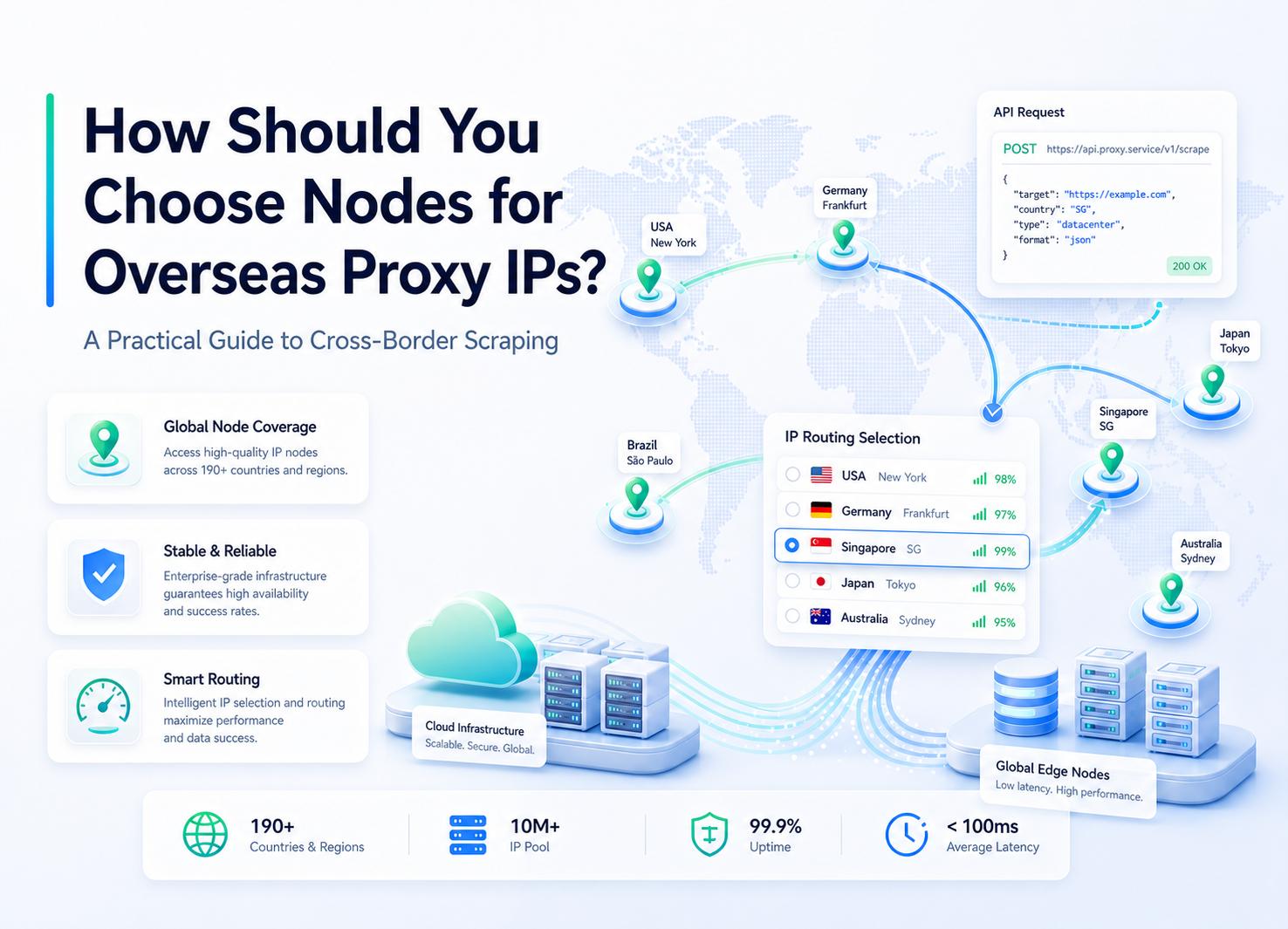
**A practical guide to choosing overseas proxy IP nodes for cross-border scraping — covering target-market alignment, pool types, latency testing, and compliance risks.**
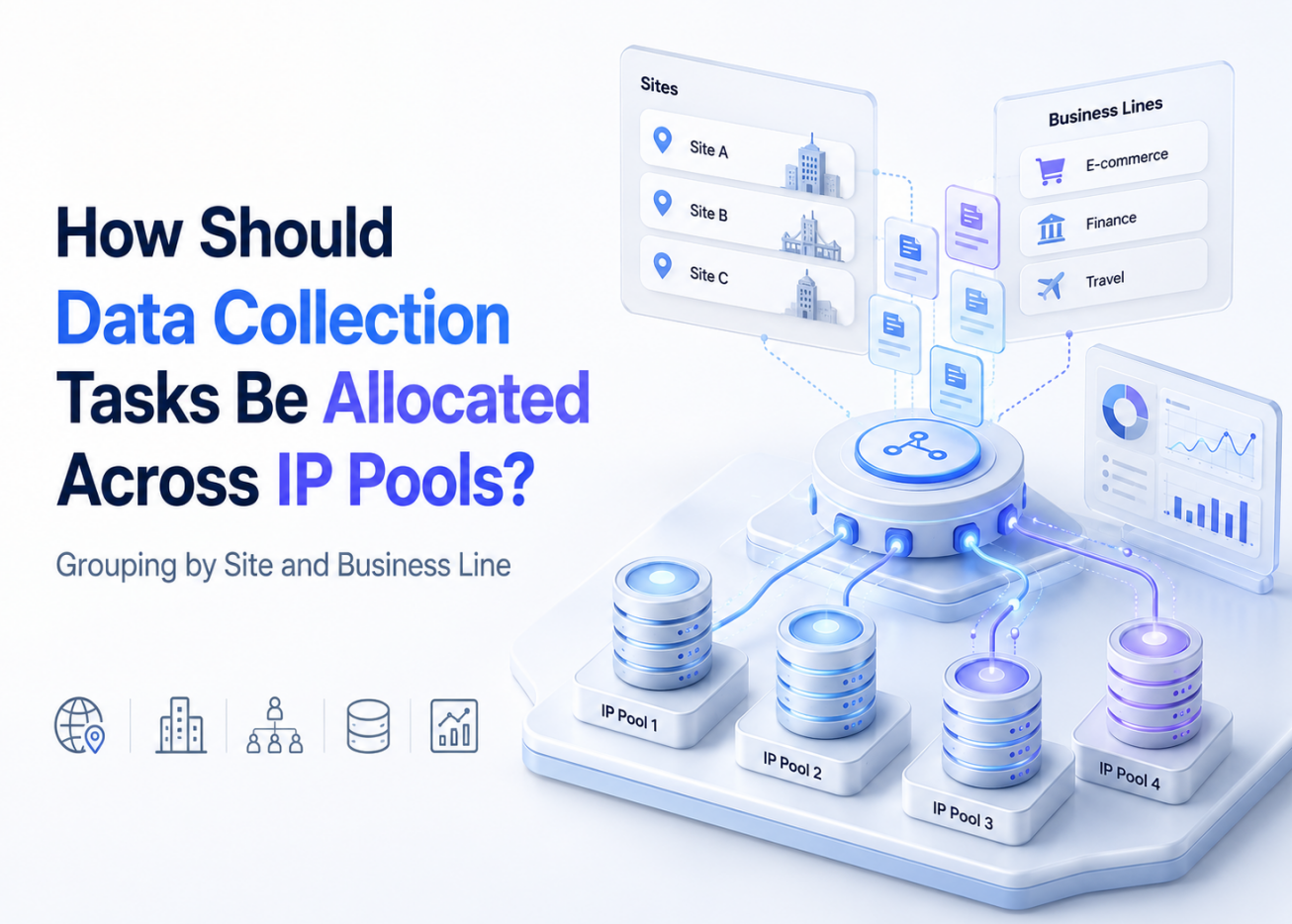
Group IP pools along two dimensions—target site and business line—to prevent cross-contamination when running multiple data collection tasks in parallel.
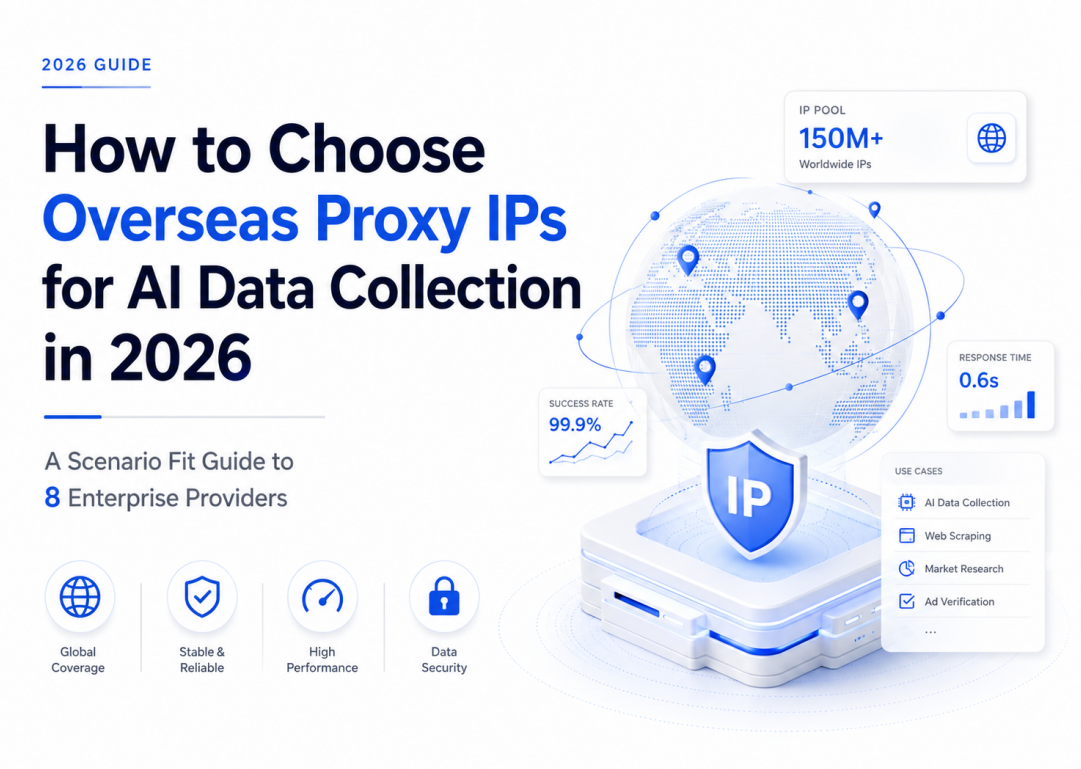
A scenario-matched evaluation of 8 overseas proxy providers for 2026 AI data collection — covering bandwidth, billing models, and compliance, not just IP pool size.
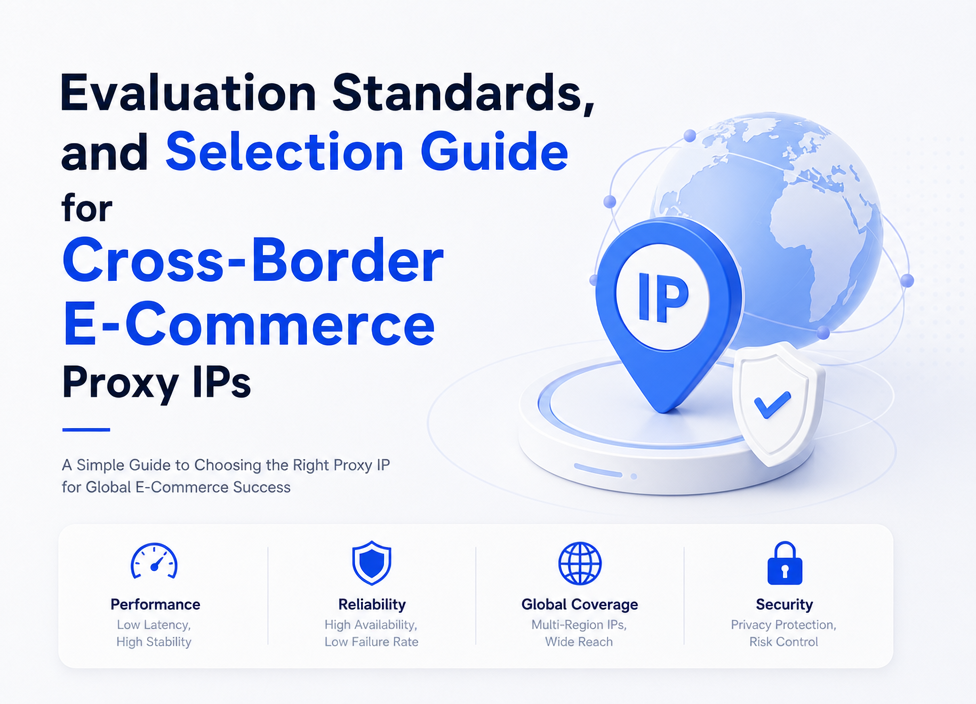
A five-dimension testing methodology for cross-border e-commerce proxy IPs—covering connectivity, latency, geographic precision, protocol compatibility, and stability, with a scenario-weighted selection framework.
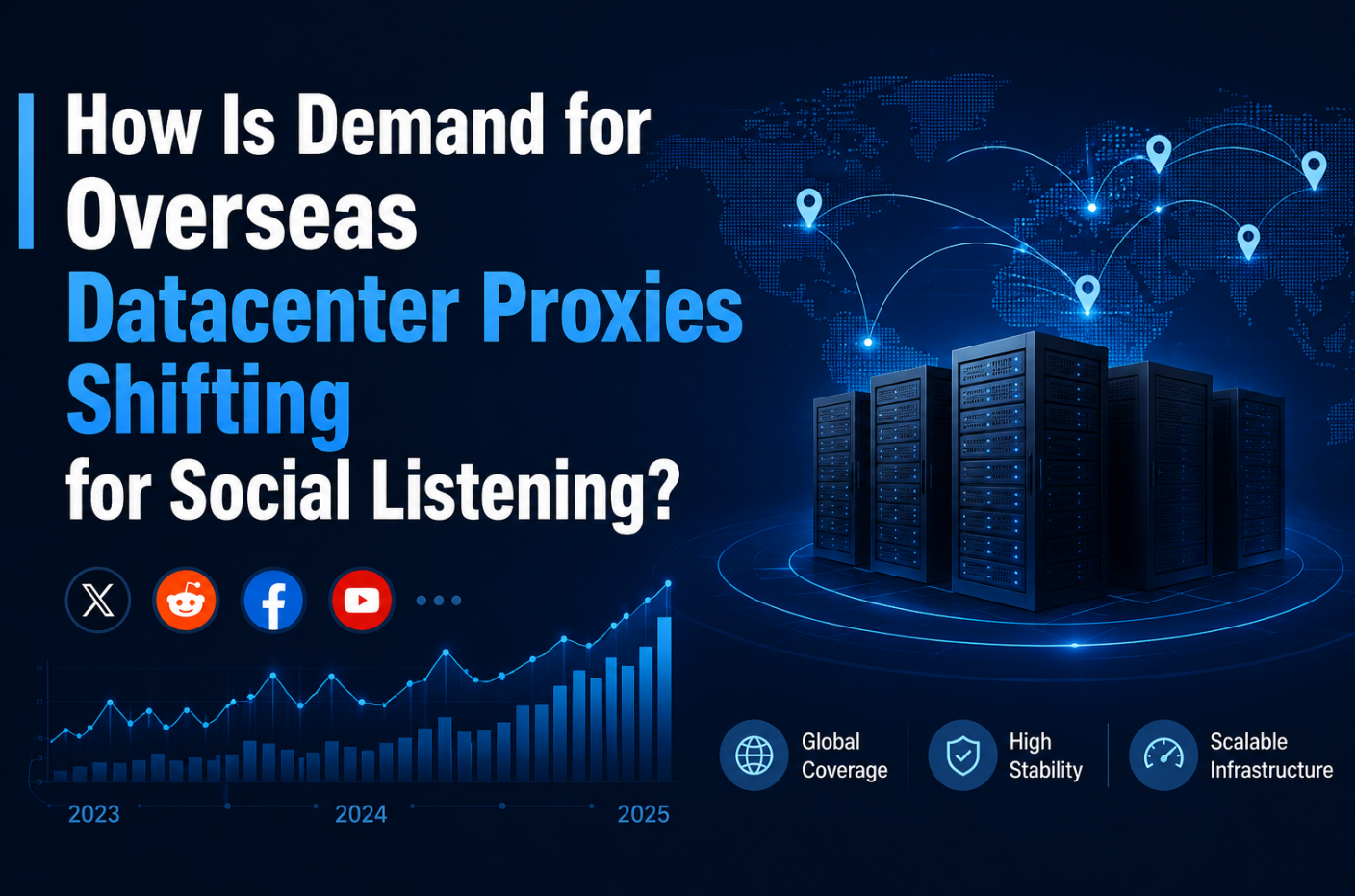
Demand for overseas datacenter proxies in social listening is shifting from "IP volume race" to a structural upgrade across three axes: scheduling strategy, protocol-layer fingerprint matching, and regional compliance.