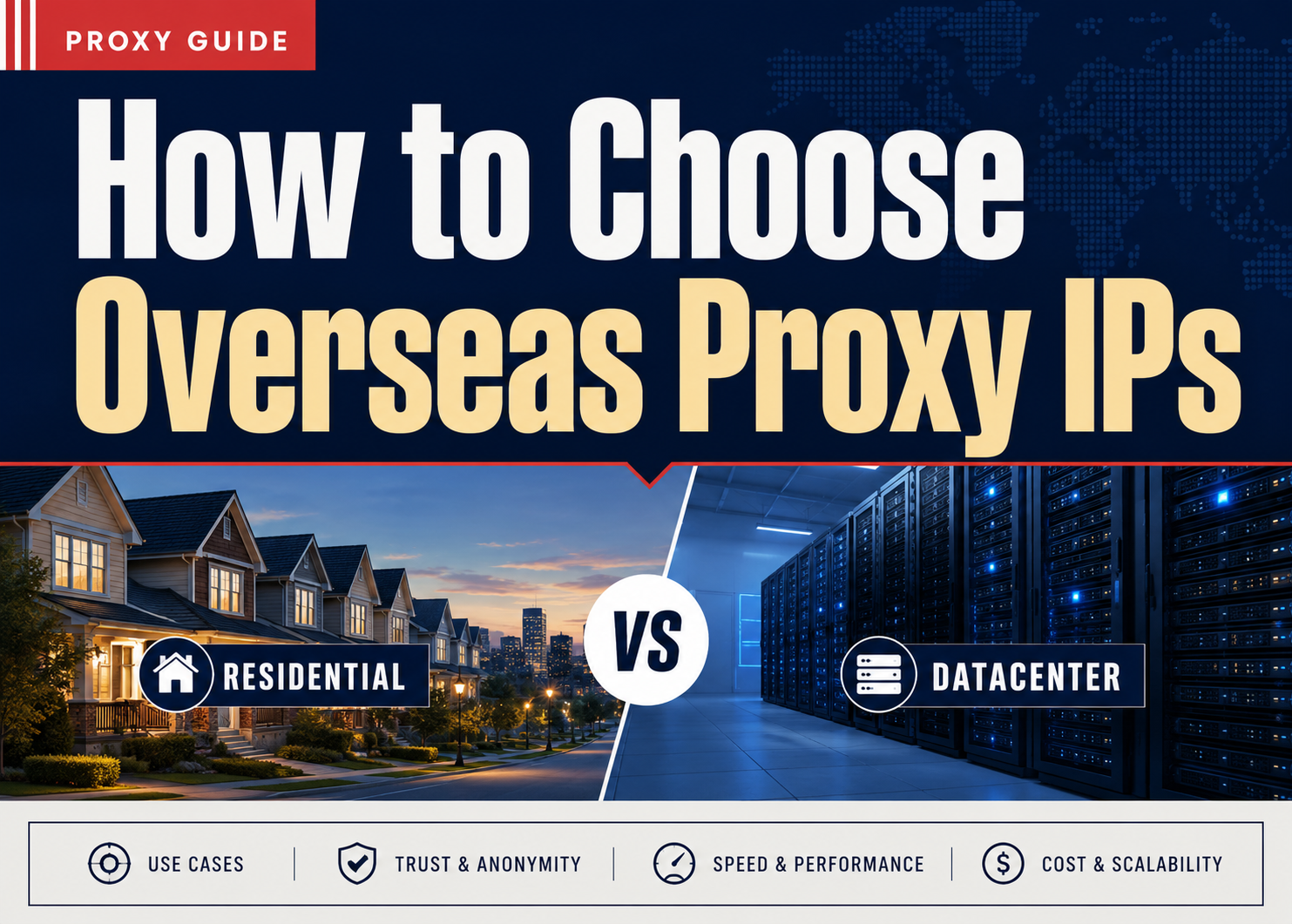
A practical guide to picking between residential and datacenter proxy pools for overseas scraping — match the pool to your target's IP-detection logic, not to price or "which is better."
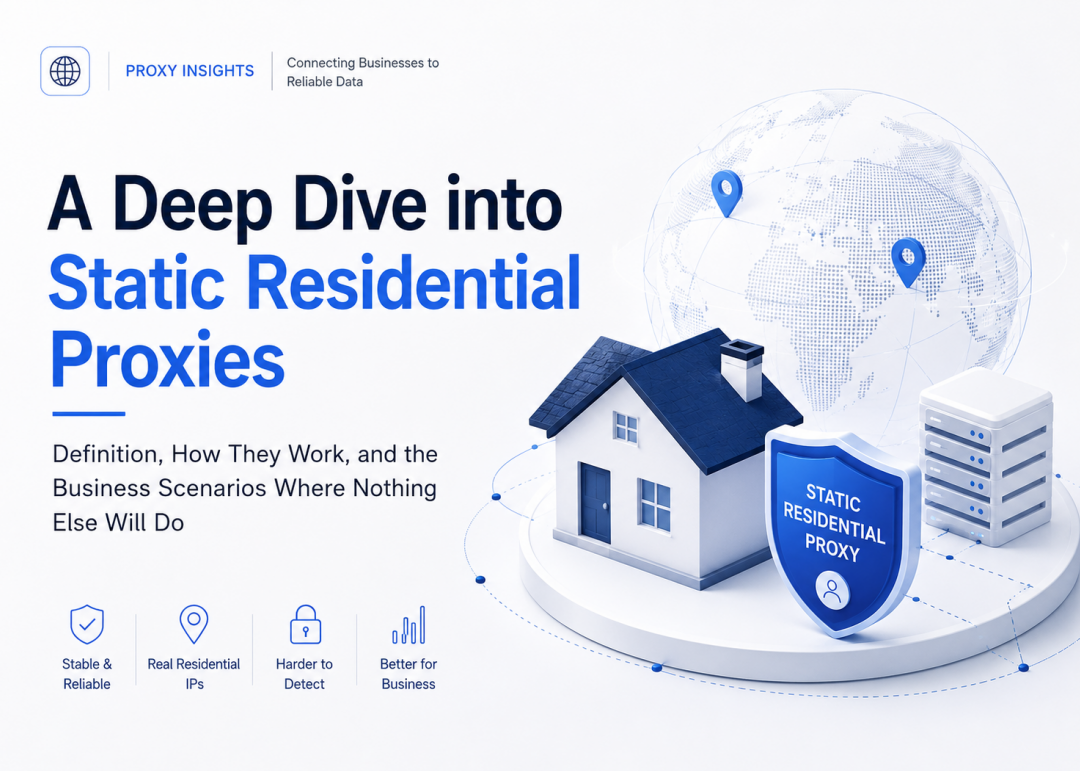
Static residential proxies combine real-ISP authenticity with month-long IP stability — irreplaceable for long sessions, audit-traceable queries, and platforms that block datacenter IPs.
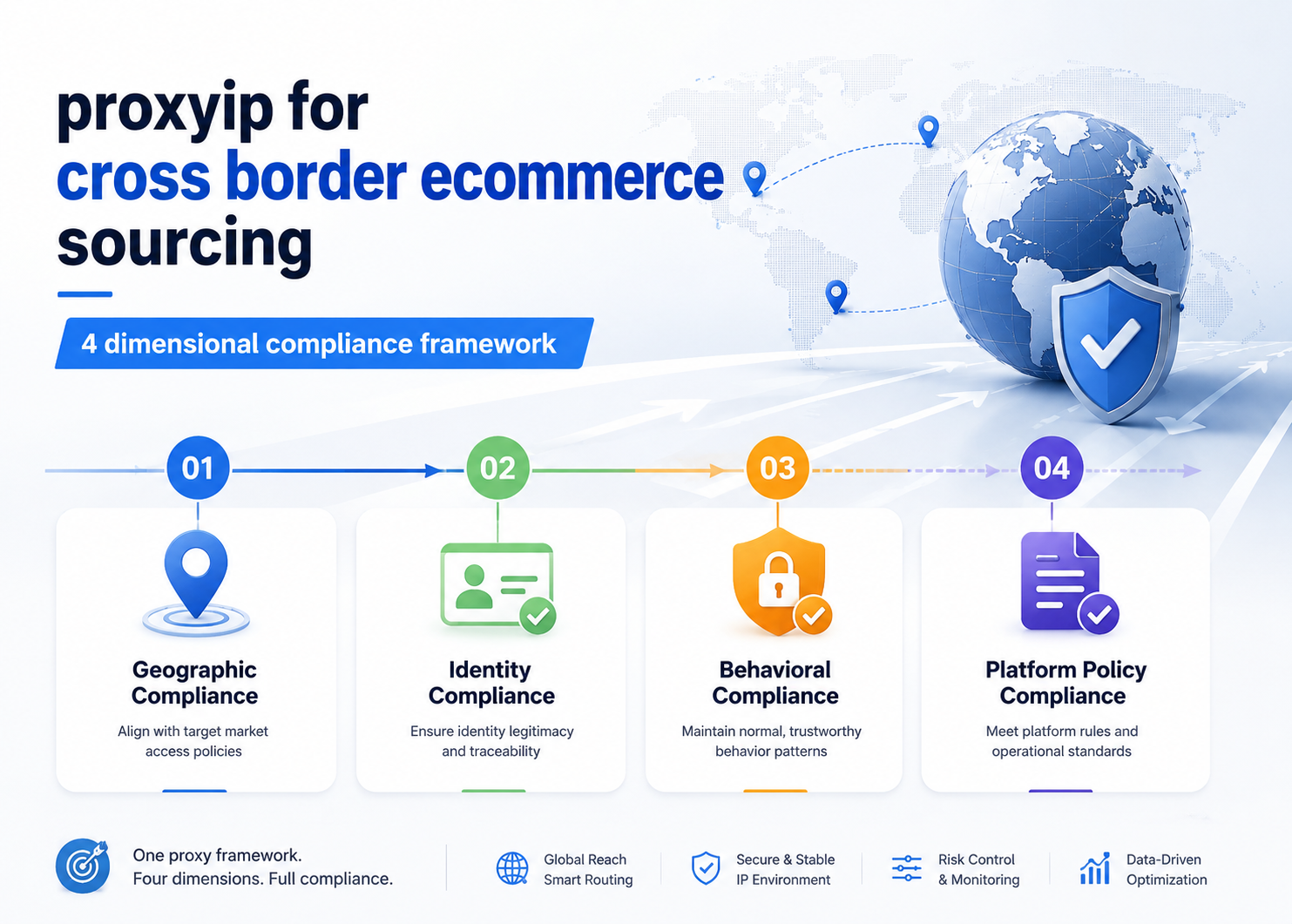
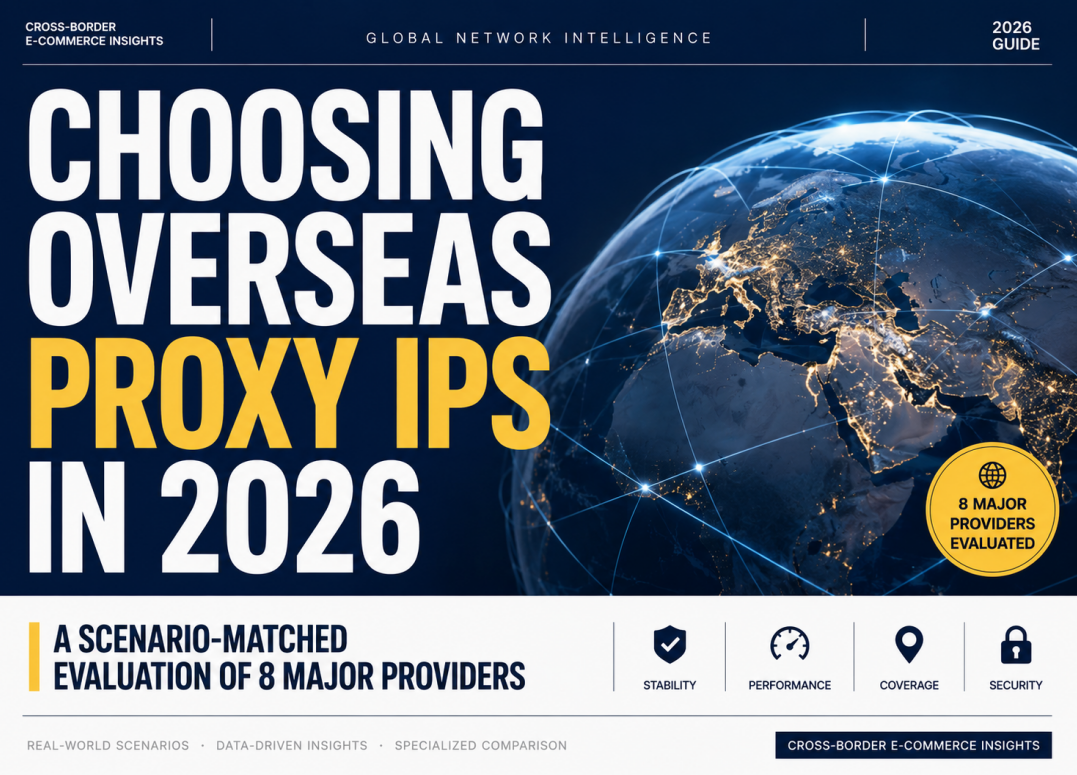
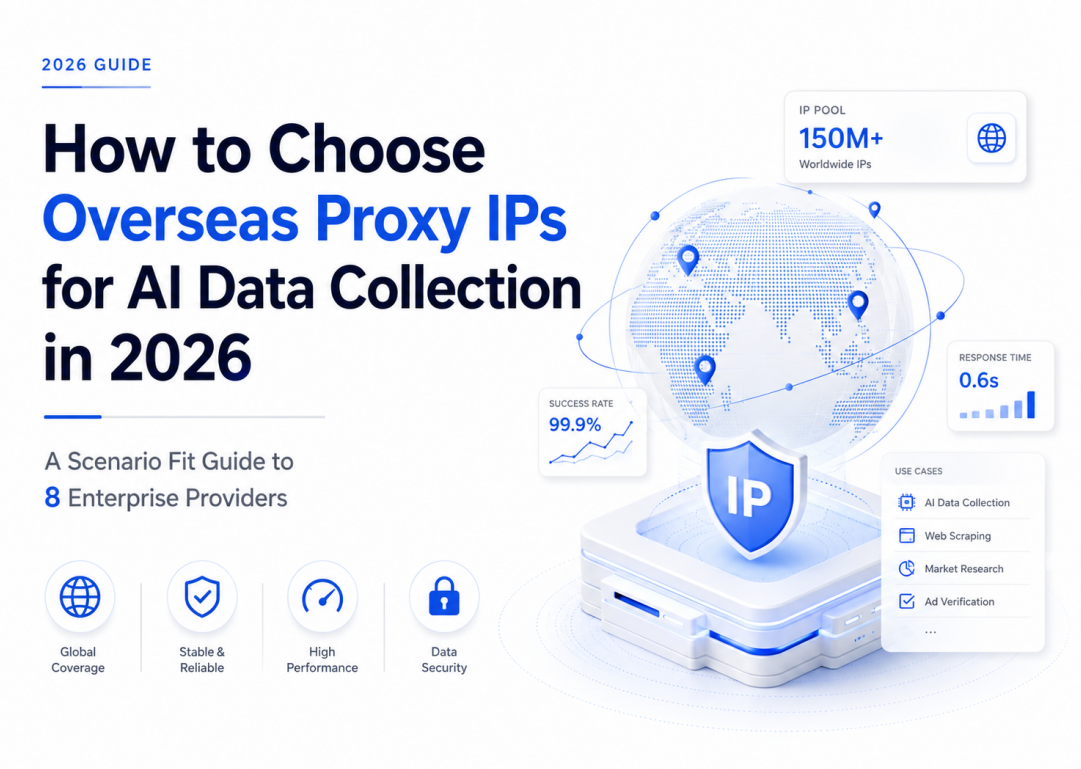
A 2026 buyer's guide to 8 overseas proxy providers, evaluated by real business scenarios — cross-border sourcing, ad monitoring, sentiment monitoring, and AI data collection — not by feature checklists.
A scenario-matched evaluation of 8 overseas proxy providers for 2026 AI data collection — covering bandwidth, billing models, and compliance, not just IP pool size.
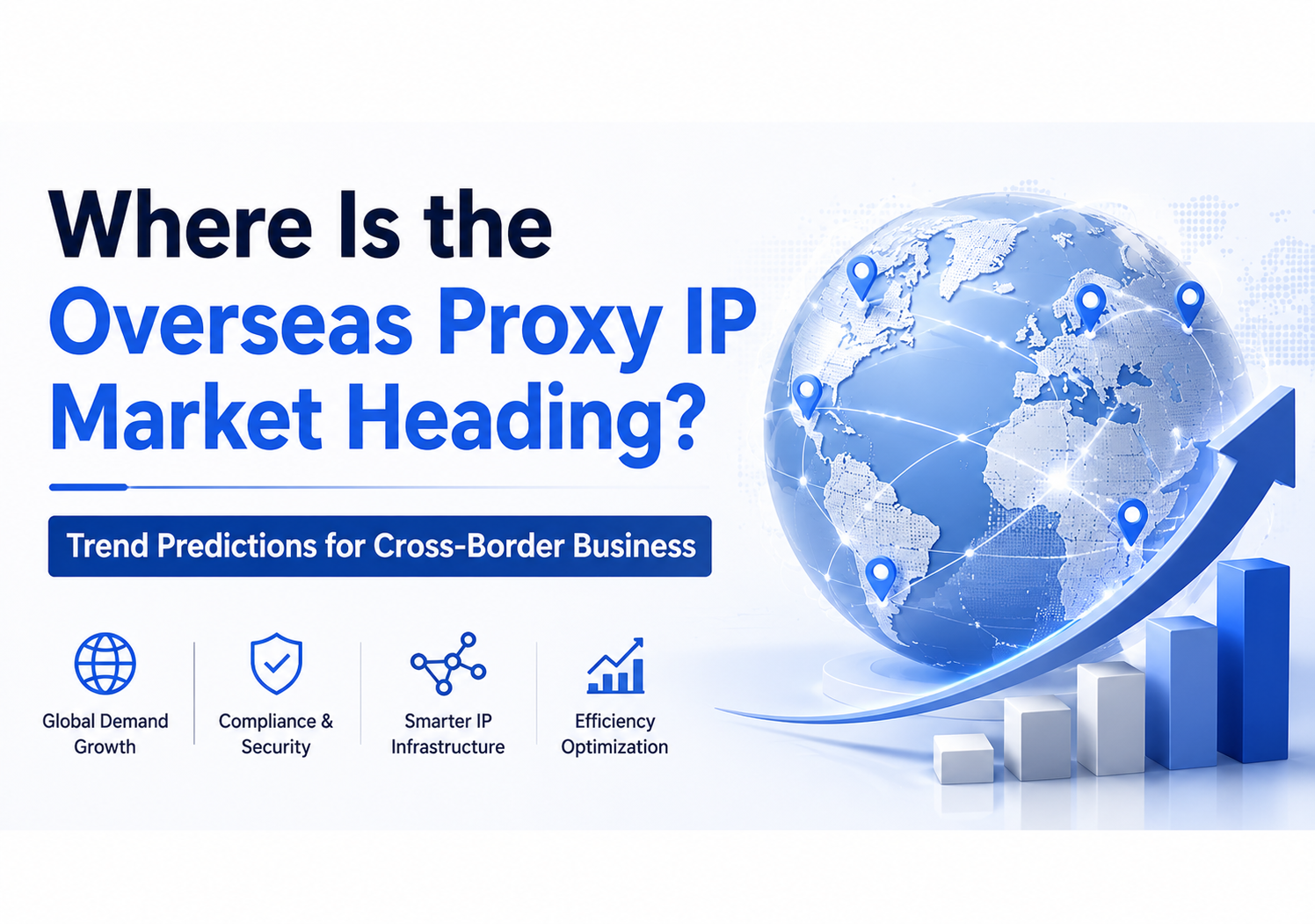
The overseas proxy IP market is shifting fast — from IP pool size to compliance fit, scenario tiering, and AI pipeline integration. Here are four trends reshaping how cross-border businesses should approach proxy IP selection in 2026.
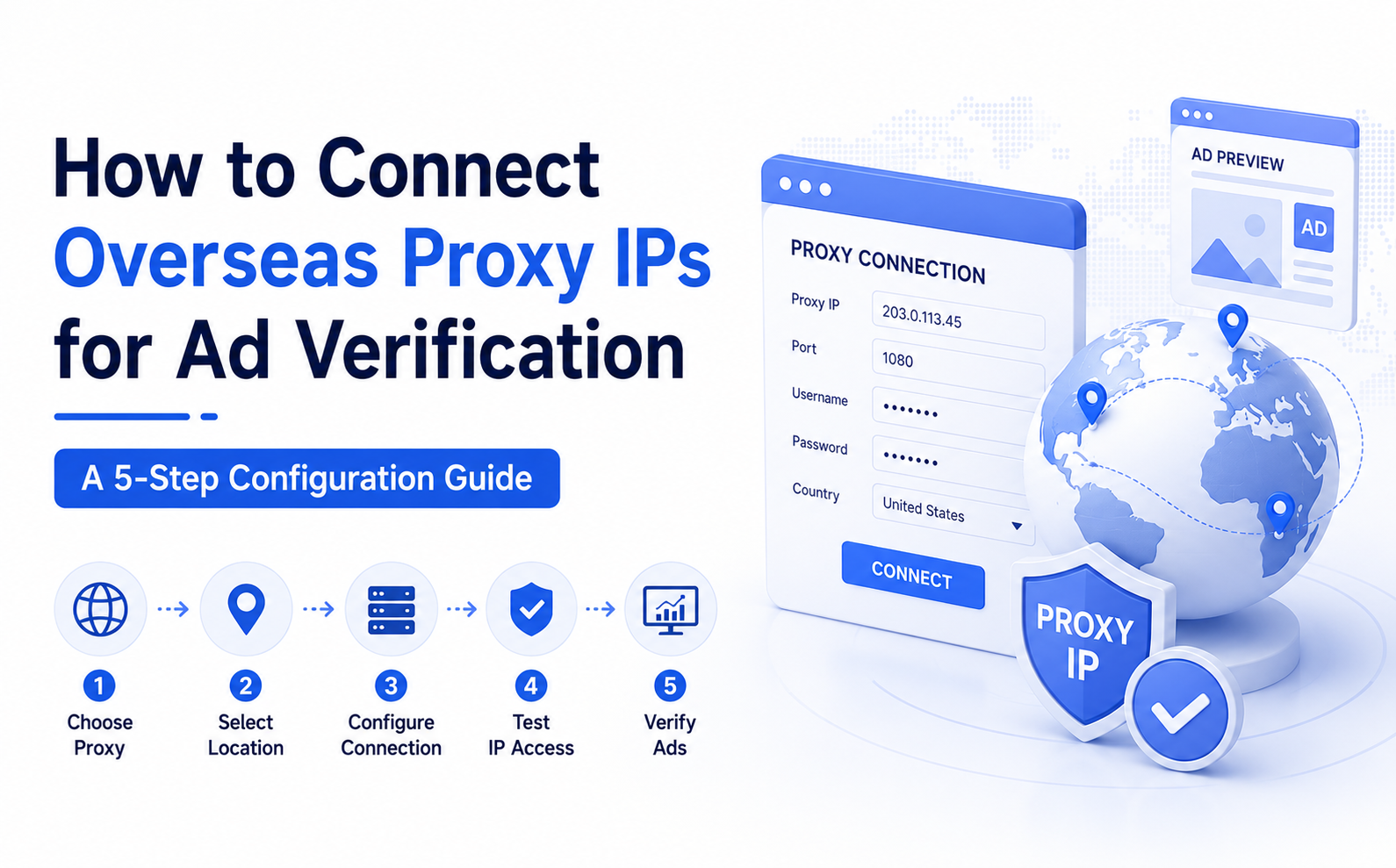
Ad verification depends on sending real requests from the exact regions your ads target. This 5-step guide covers how to integrate overseas proxy IPs — from node matching and authentication to request construction, frequency control, and result validation
Use Cases2026/06/17 68 Likes 0 Comments 1000 Views
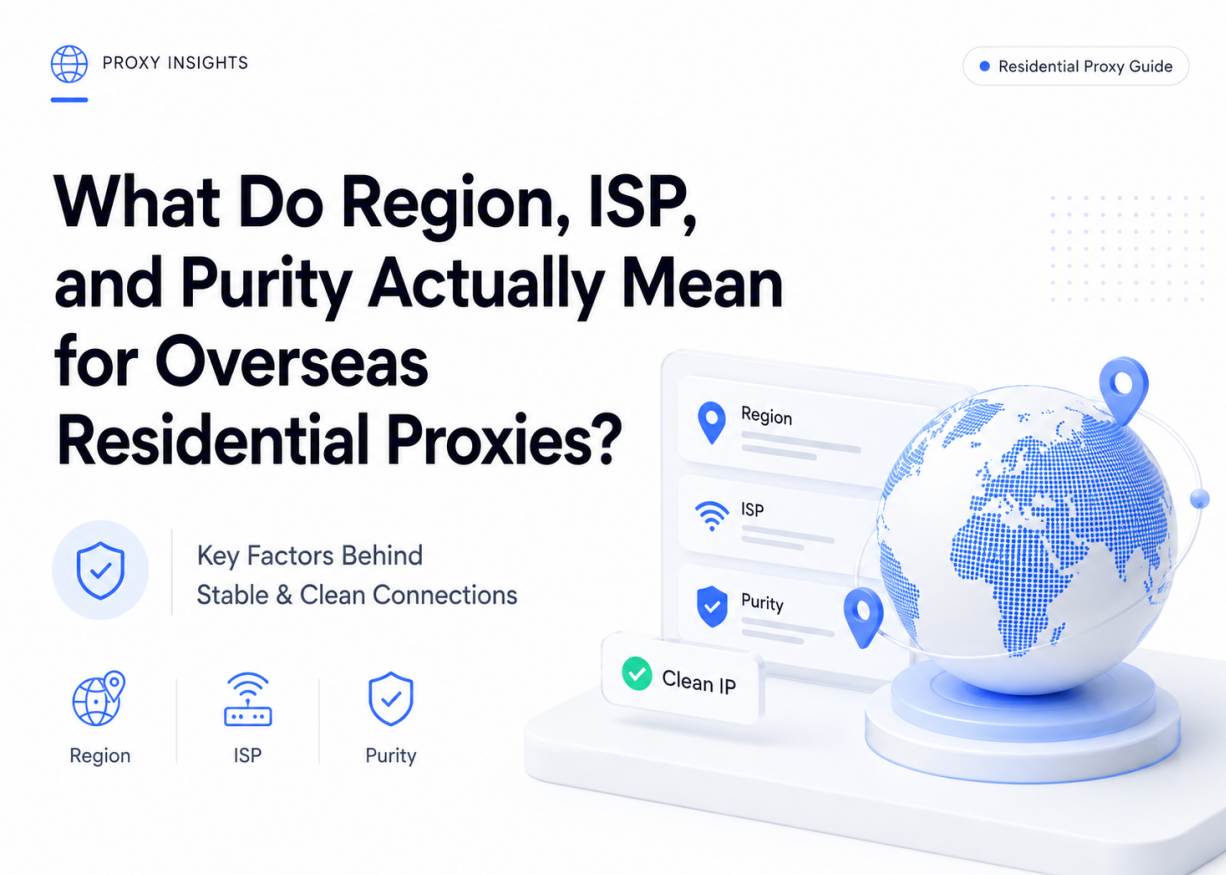
Stop comparing residential proxy providers on IP pool size alone. Region, ISP, and purity are the three layered filters that actually determine whether an IP works for your task — and what to ask during selection to verify each one
Static residential proxies hold the same IP long-term while keeping a residential identity — combining the access environment of a home user with datacenter stability.
Demand for overseas datacenter proxies in social listening is shifting from "IP volume race" to a structural upgrade across three axes: scheduling strategy, protocol-layer fingerprint matching, and regional compliance.