Residential IPs come from home broadband or mobile networks and better match real resident access environments. They suit regional content testing, public data scraping, ad verification, and cross-region business checks.
Overseas proxy IP selection has evolved from three simple criteria to 8–10 decision variables spanning IP subtypes, protocols, billing models, regional compliance, and ASN purity.
Three criteria defining the top purity tier for native static residential IPs—direct ISP issuance, AS-geo consistency, and cross-database residential tagging—with a five-tier hierarchy for benchmarking.
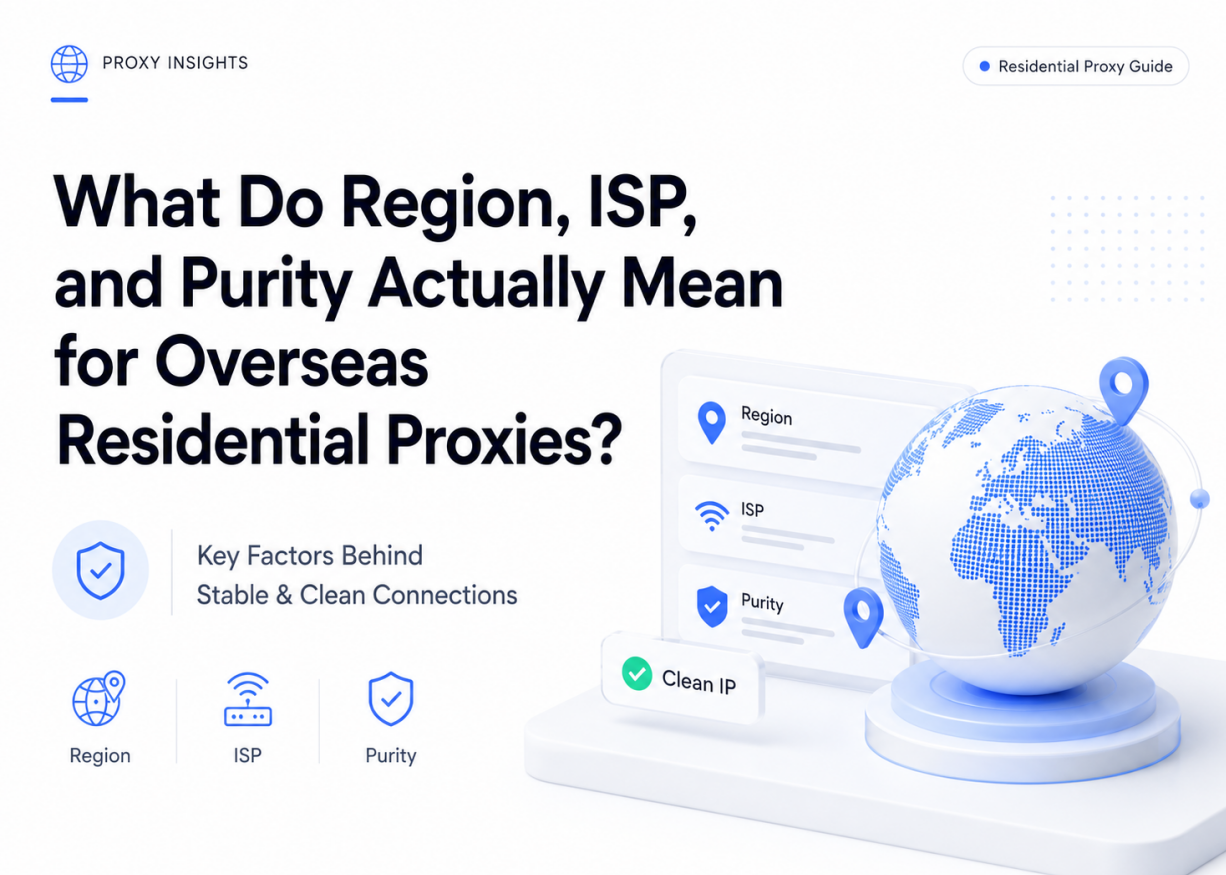
Stop comparing residential proxy providers on IP pool size alone. Region, ISP, and purity are the three layered filters that actually determine whether an IP works for your task — and what to ask during selection to verify each one
As regional ad monitoring scales, proxy routing evolves from switching between individual locations into joint scheduling based on region, time, device, task, and node health.