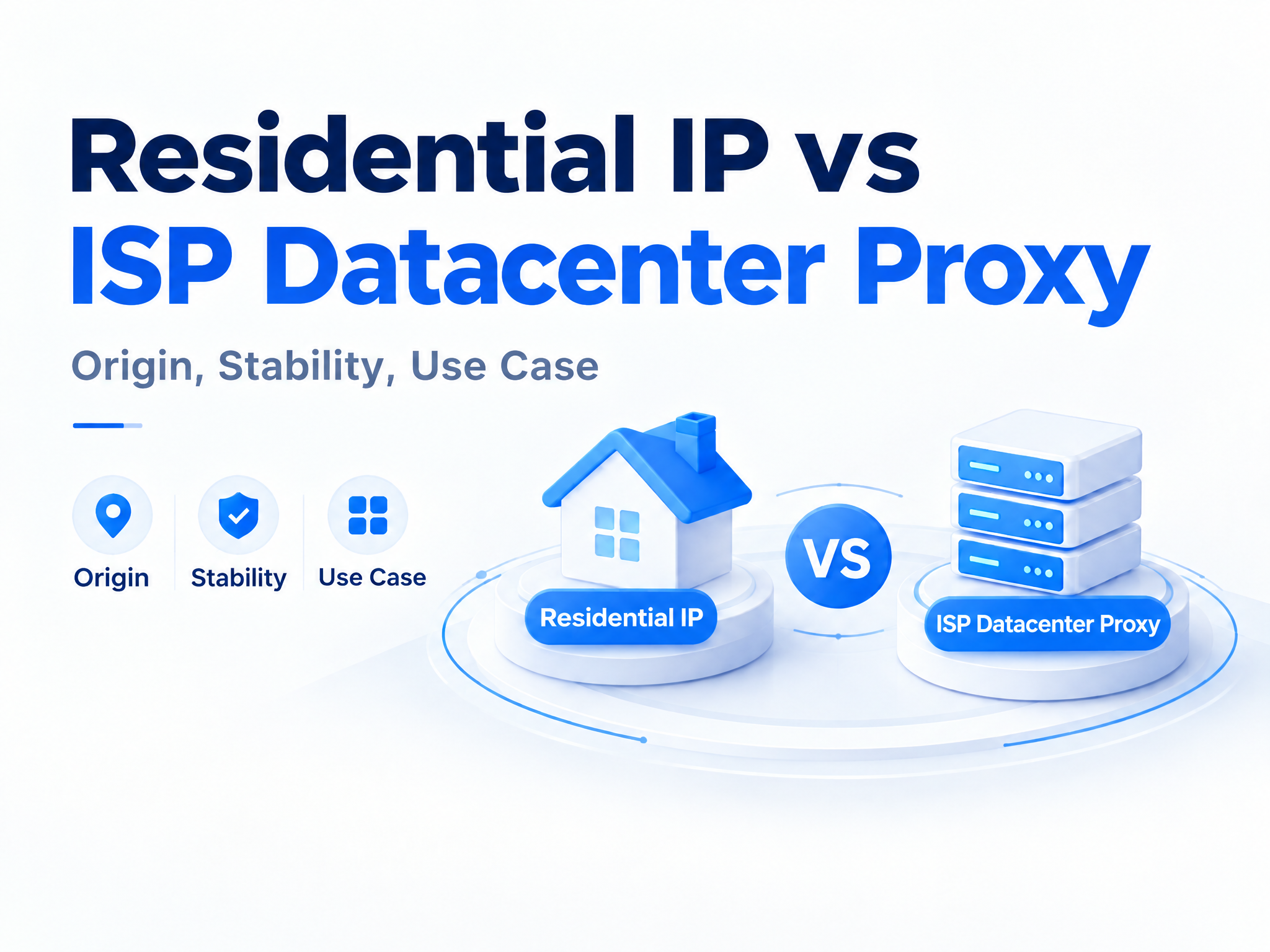
Residential IPs come from home broadband networks; ISP datacenter proxies deploy servers in data centers with ISP-registered IPs. The real difference lies in network entry point, not IP labels.
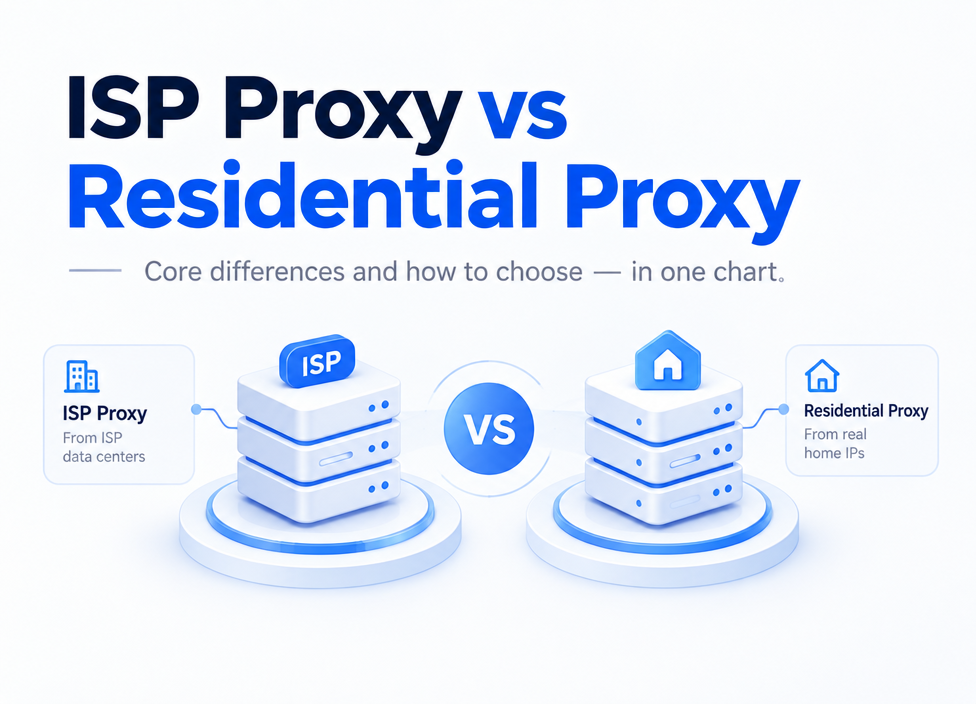
ISP proxies emphasize fixed exits, stable connections, and carrier network attribution. Residential proxies emphasize IPs from real home or access networks. Choose by task requirements.
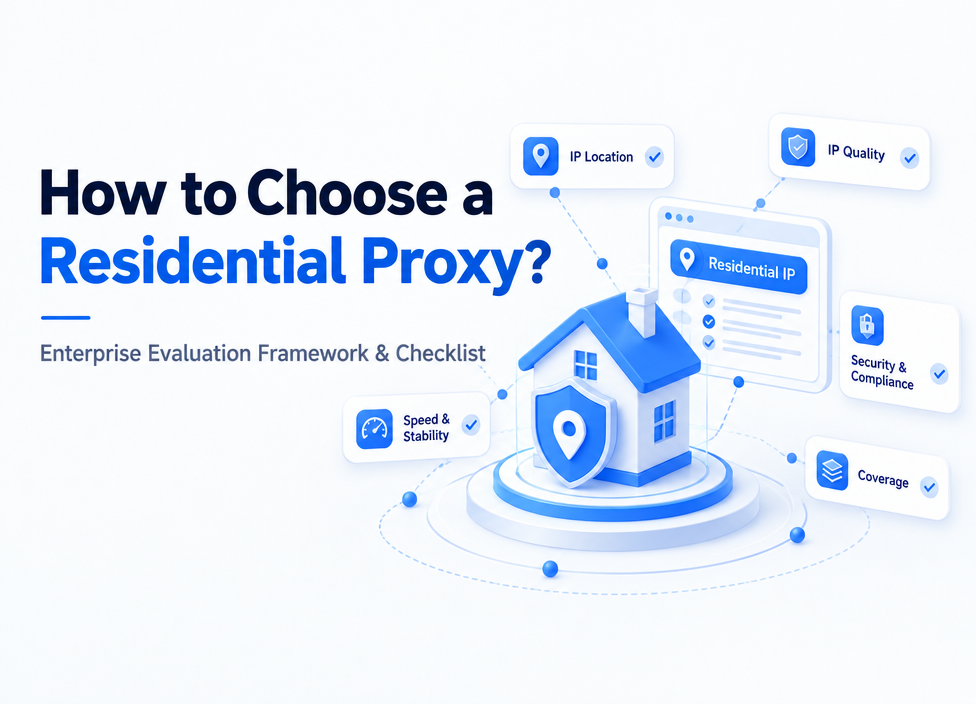
Enterprises shouldn't pick residential proxies on IP count or unit price. Evaluate across six dimensions and validate with three testing stages — compatibility, stability, and business sample.
A 2026 selection guide comparing 5 overseas proxy IP providers for cross-border e-commerce — mapping sub-scenarios like sourcing, logistics, and ad monitoring to the right pool type and billing.
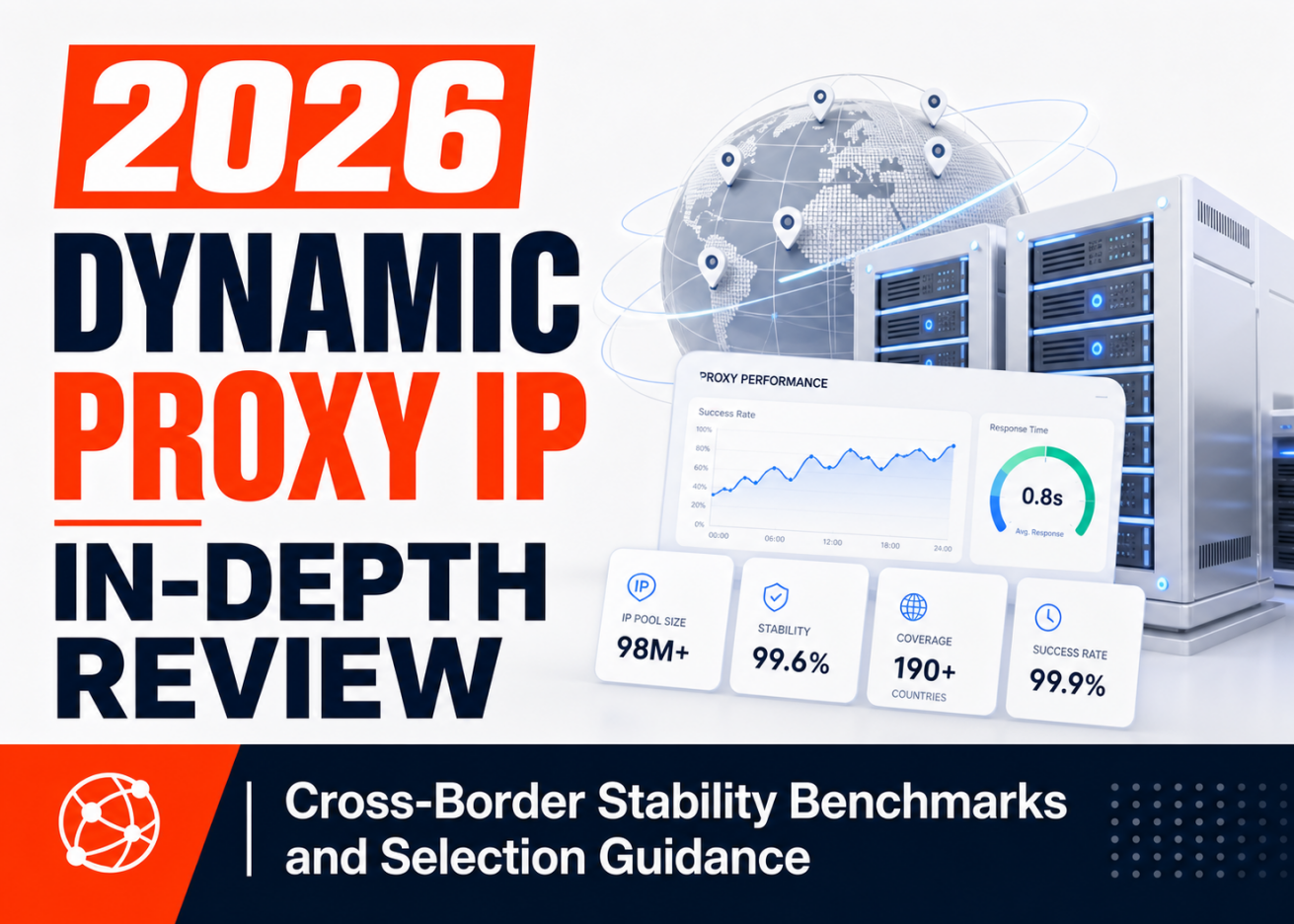
2026 review of 8 dynamic proxy IP vendors for cross-border business—benchmarking stability across product research, logistics tracking, and ad monitoring, with scenario-based selection guidance.
Use Cases2026/07/21 76 Likes 0 Comments 1042 Views
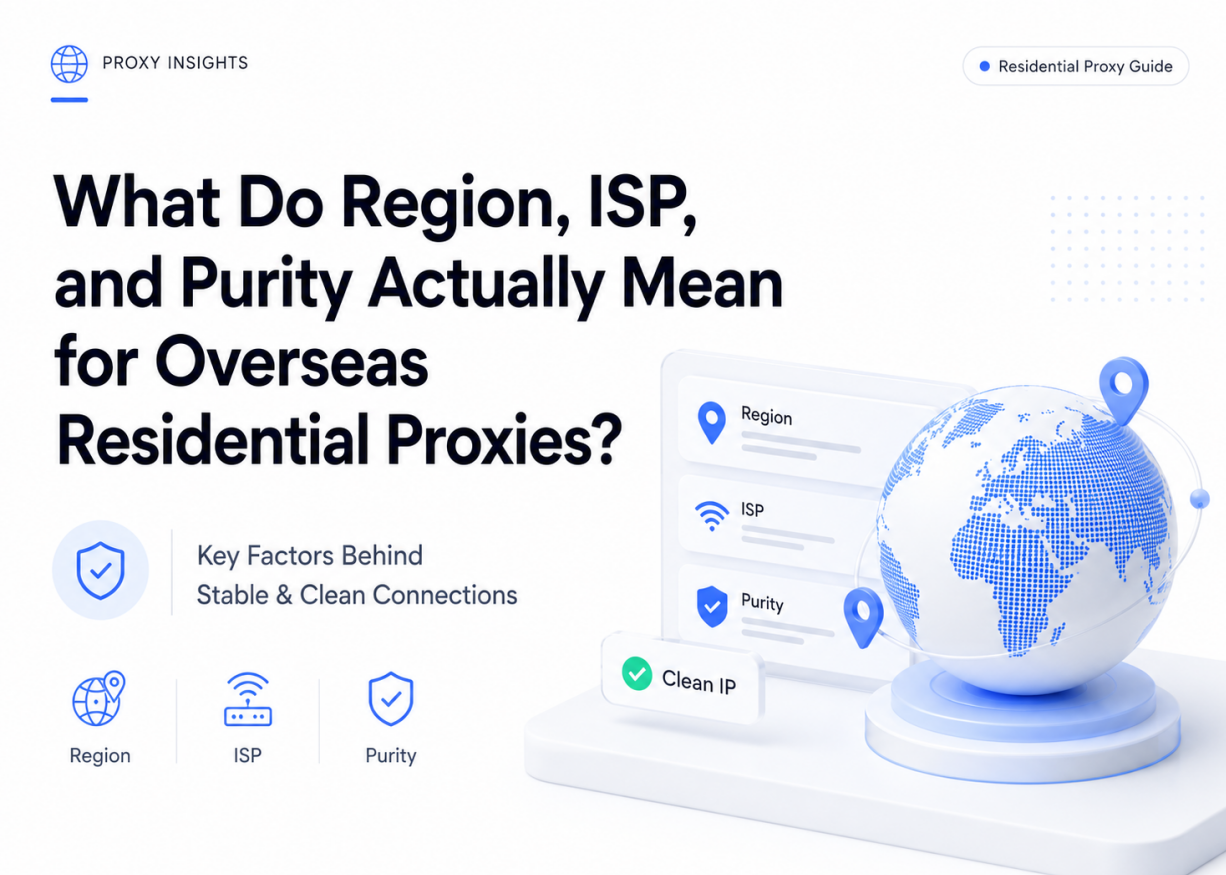
Stop comparing residential proxy providers on IP pool size alone. Region, ISP, and purity are the three layered filters that actually determine whether an IP works for your task — and what to ask during selection to verify each one