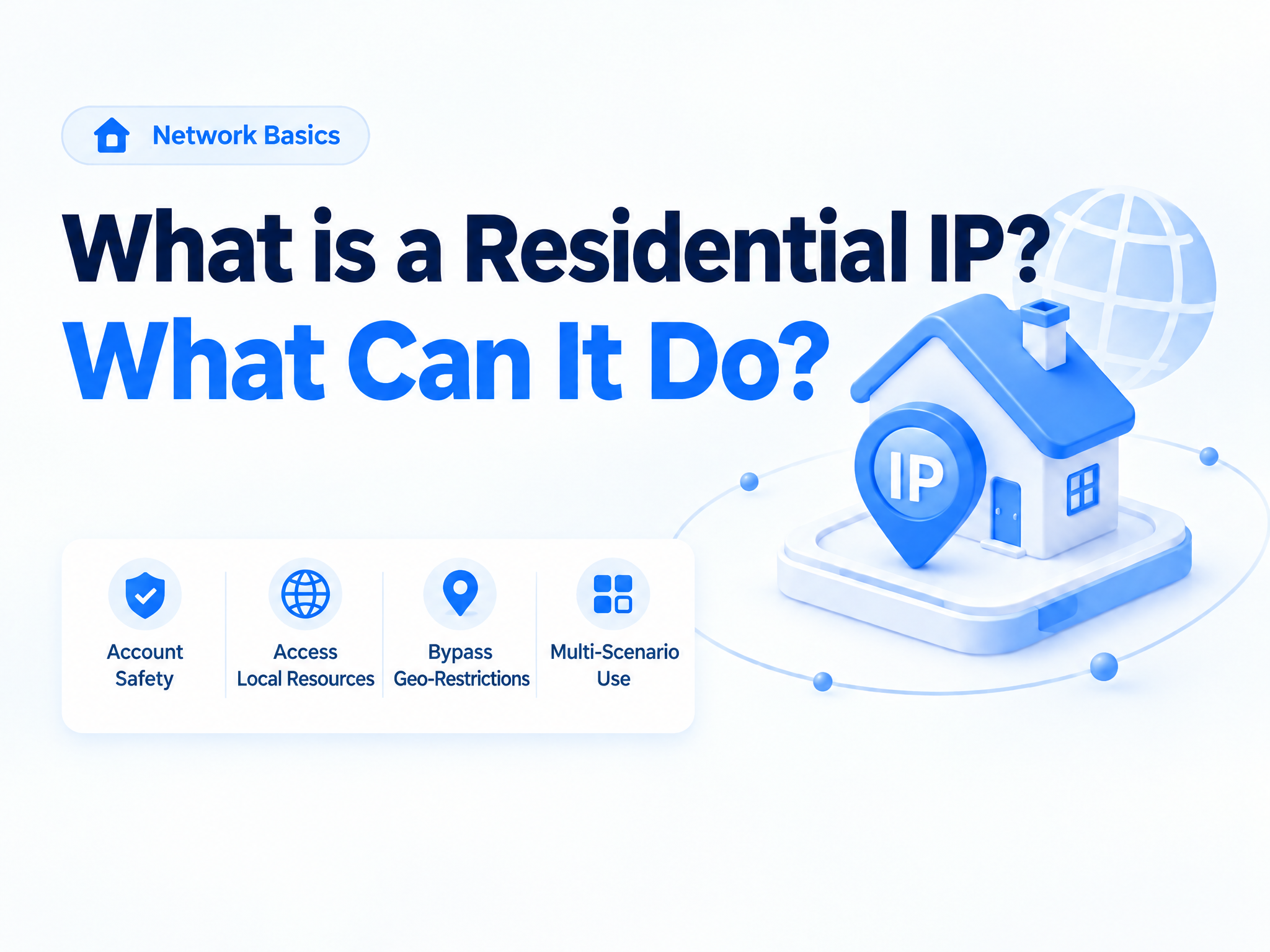
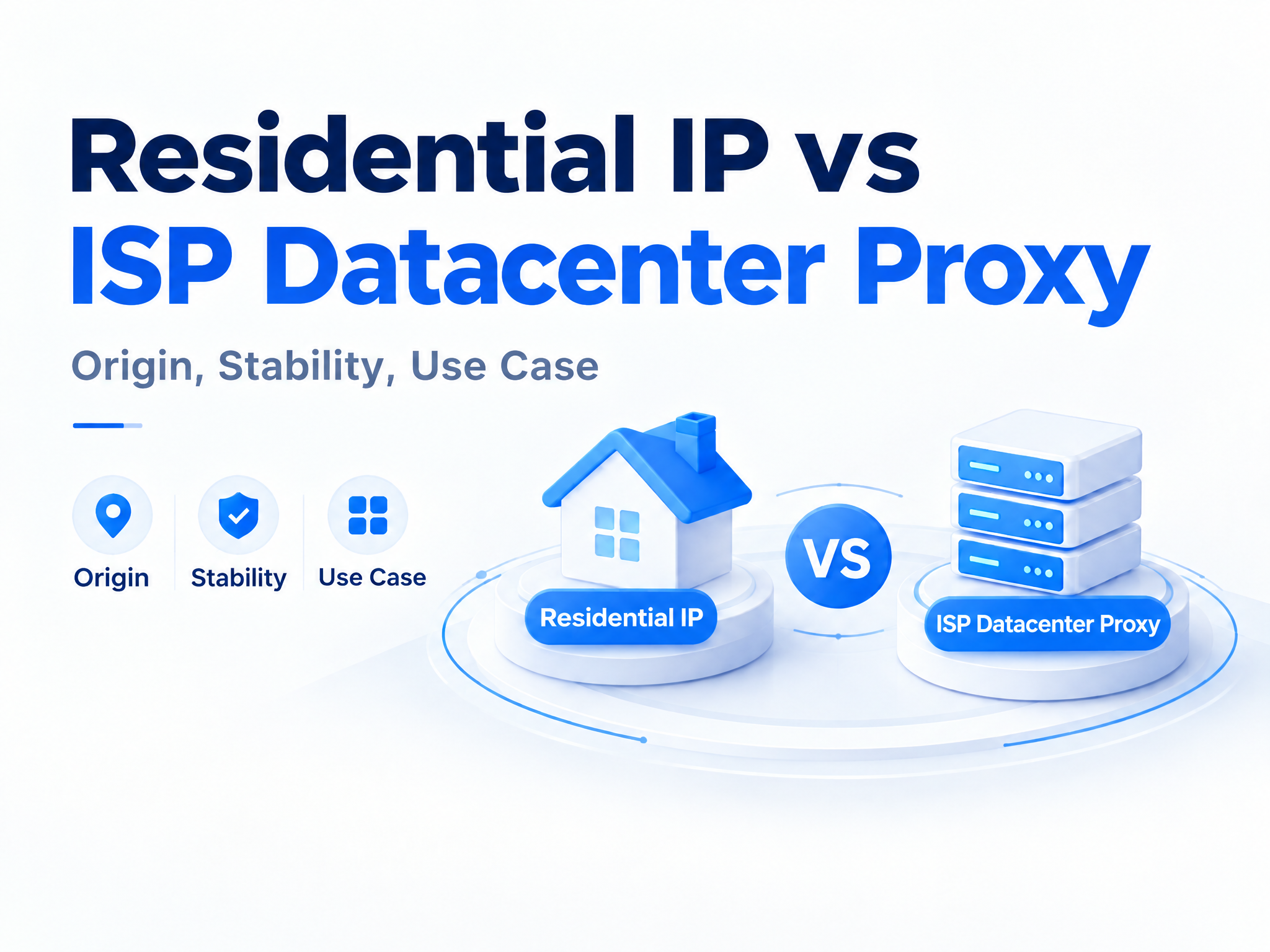
ISP proxies usually refer to a category of proxy where IPs are attributed to internet service providers but proxy nodes are deployed in data centers. They emphasize fixed exits, stable connections, and carrier network attribution. Residential proxies emphasize IPs from home or real access networks. Choose between the two based on whether the task needs fixed IPs, regional verification, IP rotation, or continuous sessions.
What Is the Main Role of ISP Proxies?
The main role of ISP proxies is to provide a proxy exit with specific regional and carrier network attribution, while maintaining relatively stable connection capability.
They commonly appear in these tasks:
- Fixed-IP access to enterprise systems or endpoints
- Testing website pages across different regions
- Verifying regionalized search results
- Checking network performance across different carriers
- Running long-session and continuous-flow testing
- Public information monitoring under proper authorization
ISP proxies change the request exit — they don't automatically change the account, cookies, browser fingerprint, device info, or access behavior. So they solve the network-exit problem but can't singlehandedly decide whether the target site accepts the request.
Which Scenarios Do ISP Proxies Suit?
Fixed-IP allowlist access
Many enterprise systems and endpoints restrict access source via IP allowlist. Static ISP proxies can hold a relatively fixed exit IP over a period — reducing the maintenance cost of frequently updating allowlists.
For these scenarios, confirm:
- How long the IP can hold
- Whether automatic rotation happens on node anomaly
- Whether the allowlist needs reconfiguration after IP change
- Whether dedicated IPs and fixed regions are supported
Regional website testing
Before site launches, redesigns, or campaign releases, teams often need to confirm whether pages render consistently for users across regions. ISP proxies can provide network exits in specified countries, cities, or carriers for testing:
- Whether regional pages display correctly
- Whether localized content matches
- Whether regional access restrictions take effect
- Whether CDN routing is normal
- Whether pages and endpoints return expected results
Regional information isn't determined by IP alone. Account, language, timezone, cookies, and device environment can also affect page content — so proxy testing should go alongside the full test environment.
Long-session testing
Login flows, back-office operations, API integration, and automated testing sometimes require continuously holding the same network exit. Frequent IP switching can invalidate sessions or make troubleshooting harder.
ISP proxies with longer hold times fit validating:
- Continuous operations after login
- Long connections or multi-step endpoint flows
- Long-duration page monitoring
- Service availability in fixed regions
Carrier network verification
Within the same city, different carriers' line quality may vary. ISP proxies can serve as carrier network test samples — observing access latency, connection success rate, and page load behavior.
That said, the proxy node's own data-center location, line quality, and network load also affect test results. Log proxy node, target address, time window, and network metrics during testing — don't equate a single node's performance directly with the entire carrier network's performance.
How Do ISP Proxies Differ from Residential Proxies?
ISP proxies and residential proxies can both support regionalized access, but they emphasize different things.
| Comparison Dimension | ISP Proxy | Residential Proxy |
|---|---|---|
| Core characteristic | IPs usually attributed to internet service providers | IPs usually from real access networks like home broadband |
| Node deployment | Proxy nodes usually in data centers | Usually rely on home networks or other real access environments |
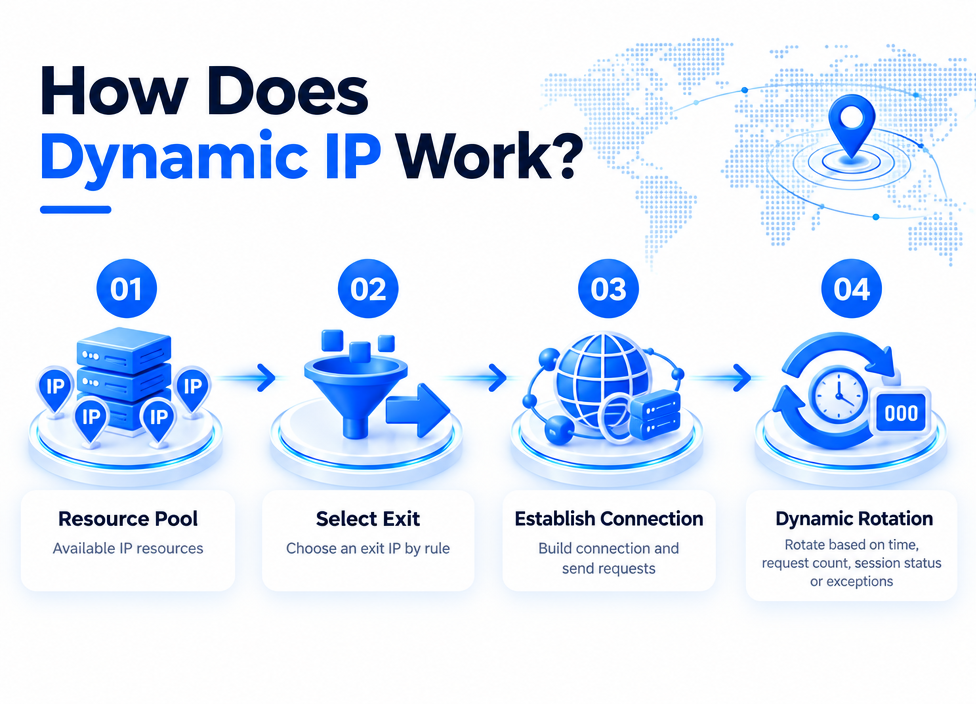
| IP rotation | Can be fixed or rotated by rules | Usually dynamic rotation, may also offer fixed forms |
| Connection performance | Usually emphasizes stability and continuity | Affected by home network, device online state, and resource quality |
| Suitable tasks | Fixed exit, allowlist, long sessions | Multi-region access, regional content verification, rotating-exit tasks |
| Key focus | IP hold time, carrier attribution, exclusivity | IP source, rotation mechanism, regional coverage, online stability |
Product naming in the market isn't fully standardized. Some services call static residential proxies "ISP proxies"; others strictly separate IP source and deployment environment. When judging the two, don't look at product titles alone.
How to Choose Between ISP and Residential Proxies?
Judge first by the task's core requirement.
| Task Need | Proxy Characteristics to Prioritize |
|---|---|
| Configuring IP allowlist | Fixed IP, longer hold time, exclusivity level |
| Continuous login or flow testing | Stable connection, session duration, node controllability |
| Verifying regional pages | Country, city, carrier, and IP geographic info |
| Frequently changing network exit | Rotation mechanism, IP pool scale, change rules |
| Testing home network environment | Real access network source, residential IP attributes |
| High-concurrency endpoint access | Protocol compatibility, connection capacity, concurrency limits |
| Long-term monitoring | Node stability, failure switching, data logging capability |
If the task centers on "hold the same exit and keep working," prioritize evaluating static ISP proxies. If it centers on "get multiple real access regions and continuously rotate exits," focus on residential proxies' rotation capability and regional coverage.
What to Confirm When Choosing ISP Proxies?
Is IP attribution authentic
Query the IP's ASN, registered organization, carrier, and geographic location — confirm actual information matches product description. Different databases may have update delays; cross-check with multiple platforms when needed.
Is the IP exclusive
Shared IPs may be affected by other users' historical behavior. For enterprise systems, fixed allowlists, and long-session tasks, confirm whether IPs are dedicated and the handling method for IP changes.
How long can the IP hold
"Static" doesn't mean never changing. Confirm the IP hold cycle, replacement conditions, and handling flow after abnormal offline.
Is the target protocol supported
Common protocols include HTTP, HTTPS, and SOCKS5. Before choosing, confirm which protocol the target software supports and whether username/password, IP allowlist, or API integration is required.
Is the target region supported
"Supports a country" doesn't necessarily mean covering the target city or carrier. If the task requires regional precision, further confirm city, carrier, and IP targeting.
What Limits Apply When Using ISP Proxies?
ISP proxies don't necessarily fit every task.
First, they emphasize stability and fixed exits — cost may be higher than ordinary datacenter proxies. If the task only needs many short connections or baseline endpoint testing, ISP proxies may be unnecessary.
Second, IP attribution to an internet service provider doesn't mean the target site will treat it as a home user. Sites may also combine IP history, account state, browser environment, and request behavior for judgment.
Third, IP geographic location may have bias. The same IP may show different cities or carriers across different databases. So regional testing should defer to actual business validation results.
Finally, proxy use must still comply with target site rules and service terms. Public information monitoring, page testing, and data access should all obtain necessary authorization and reasonably control access frequency.
FAQ
Q: Is an ISP proxy a residential proxy?
Not necessarily. ISP proxies emphasize IP attribution to internet service providers; residential proxies emphasize IPs from real access networks like home broadband. Some providers call static residential proxies "ISP proxies," but specific definitions may differ — check IP source, ASN, and deployment documentation.
Q: Are ISP proxies suitable for fixed IP allowlists?
Usually yes, but confirm whether the product truly supports static IPs and how long IPs can hold. If nodes rotate frequently, you still need a matching allowlist update mechanism.
Q: Are residential proxies always more authentic and reliable than ISP proxies?
Can't be judged that simply. Residential proxies emphasize real access network source; ISP proxies emphasize carrier attribution and connection stability. Actual results also depend on IP history, region, line quality, and task type.
Q: Can ISP proxies be used for regionalized search testing?
Yes — for testing network exits and search results across regions. But search pages may also be affected by account, language, cookies, device, and location info. Changing the proxy IP alone can't cover all test variables.
Q: Are ISP proxies suitable for long-term use?
If the product offers longer IP hold time, stable lines, and clear failure handling, it can serve long-term monitoring, continuous sessions, and fixed-exit tasks. Confirm node replacement rules before use.
Q: How to judge whether a proxy belongs to the ISP category or residential category?
Judge from four angles: IP registered organization, ASN attribution, proxy node deployment location, and IP rotation method. When product name and query results don't match, prioritize actual IP information and service terms.