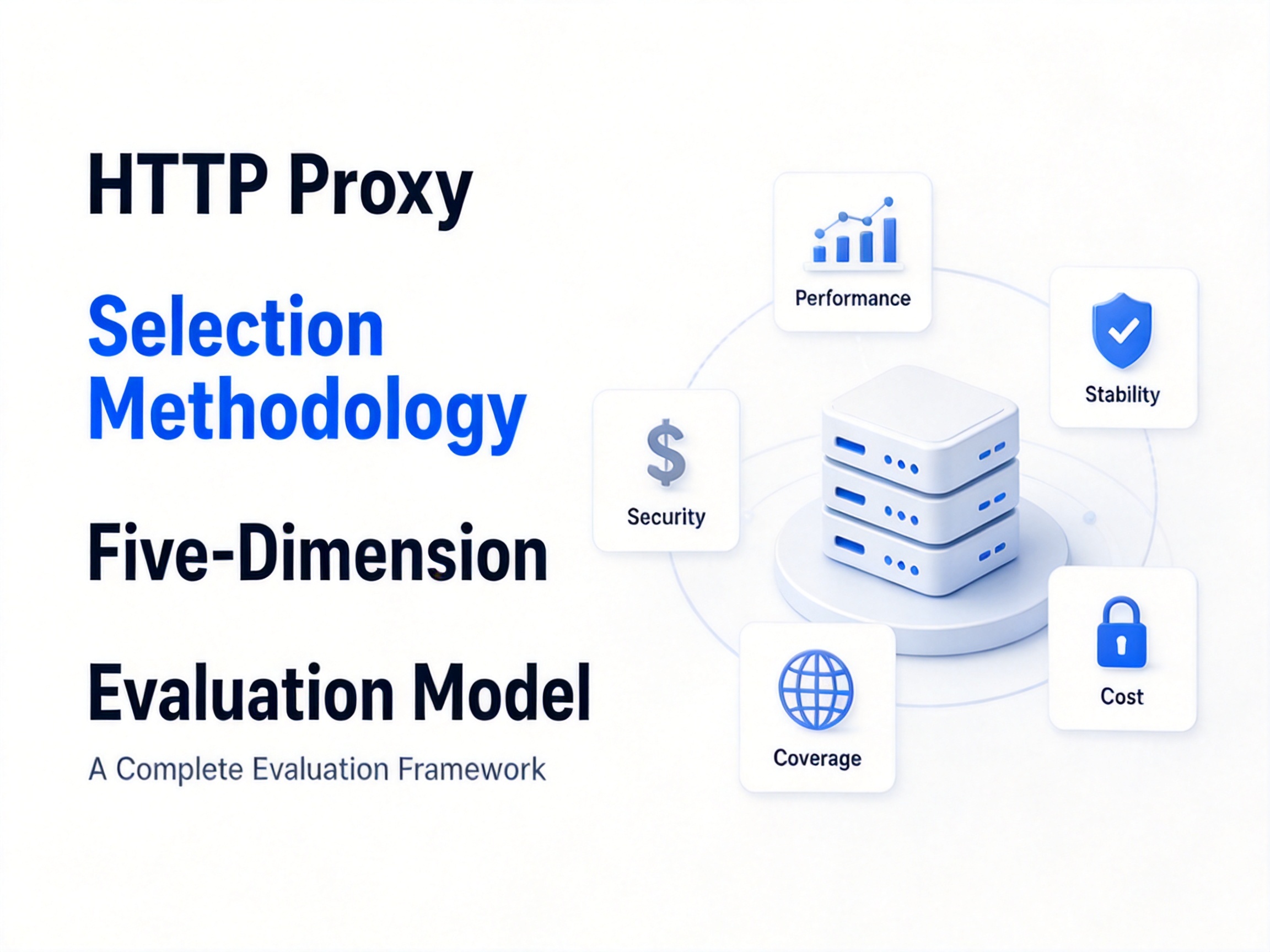
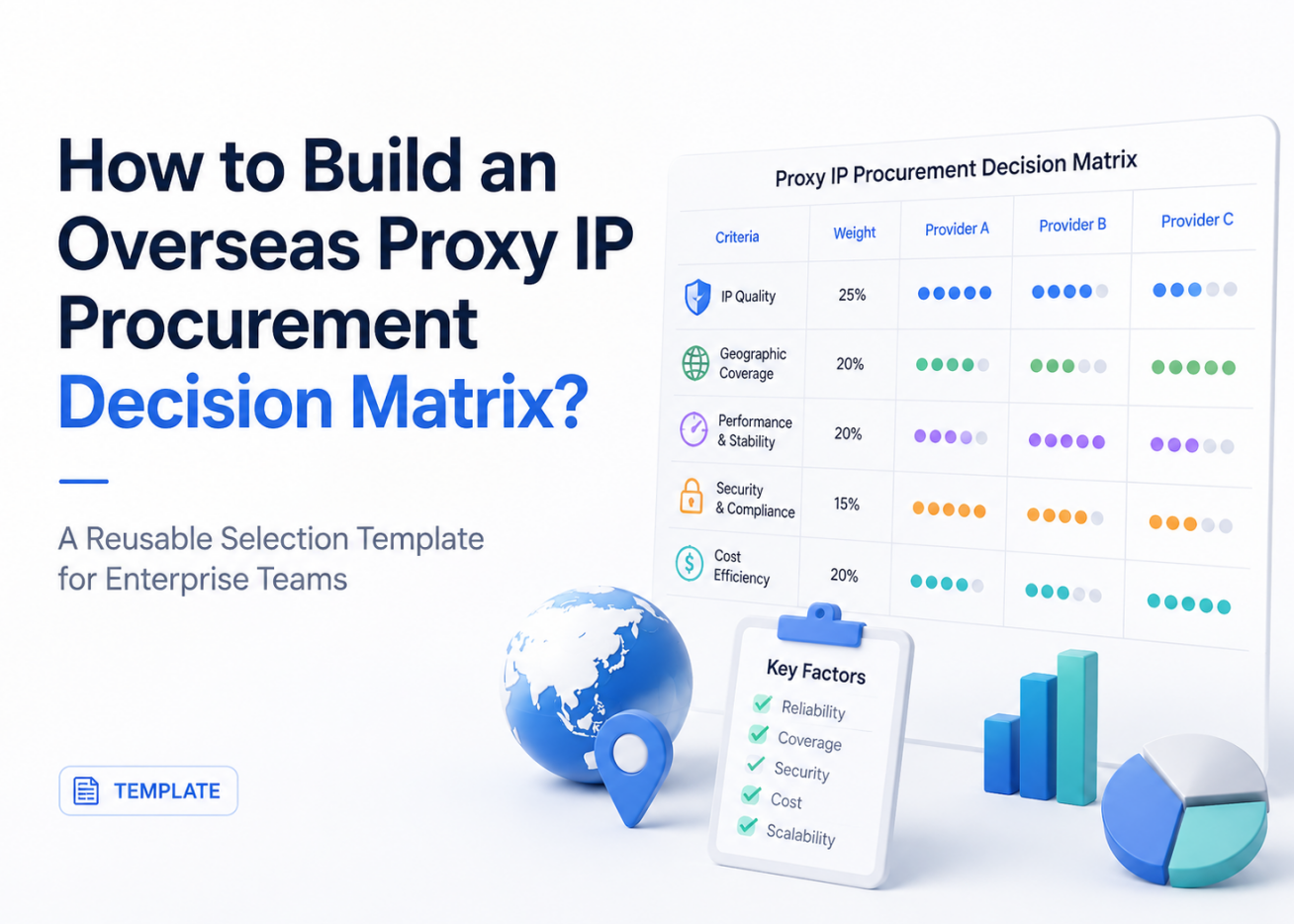
Overseas proxy IP selection has evolved from three simple criteria to 8–10 decision variables spanning IP subtypes, protocols, billing models, regional compliance, and ASN purity.
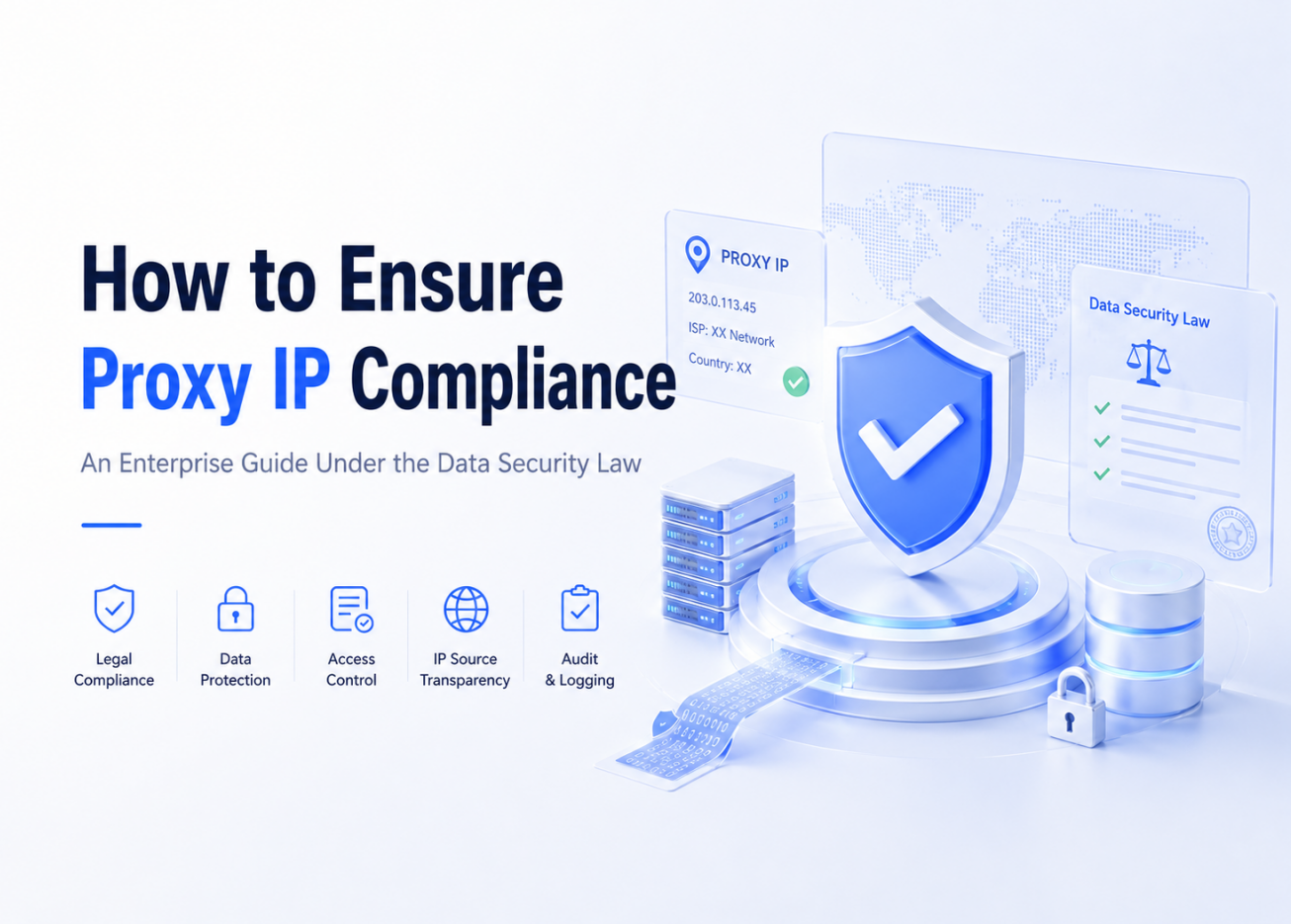
A five-dimension enterprise compliance framework for proxy IP use under China's Data Security Law—covering vendor credentials, IP source legitimacy, cross-border transfer, and log retention.
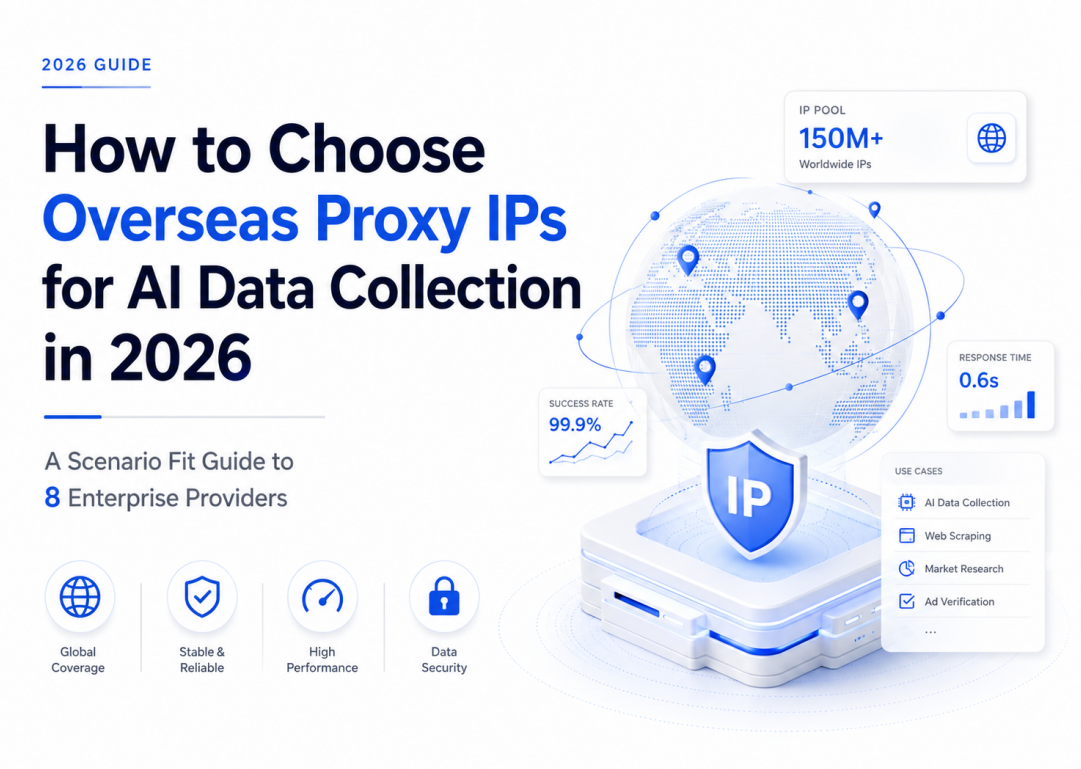
A scenario-matched evaluation of 8 overseas proxy providers for 2026 AI data collection — covering bandwidth, billing models, and compliance, not just IP pool size.
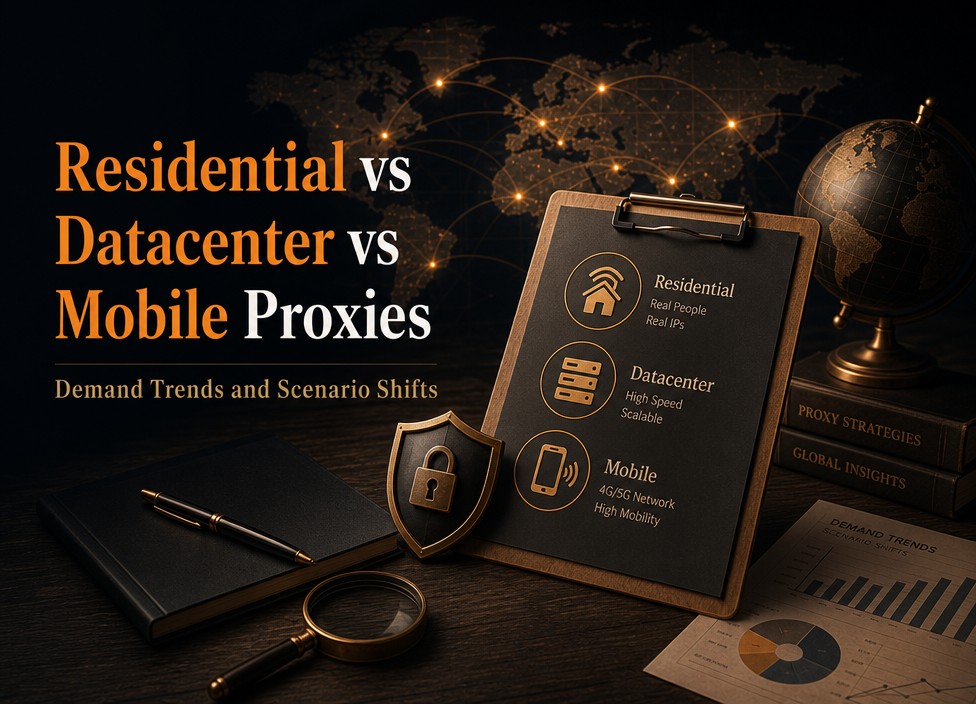
Residential IP demand keeps rising on compliance and access-isolation needs; datacenter IPs remain essential for throughput; mobile IPs are shifting from edge use to mainstream.
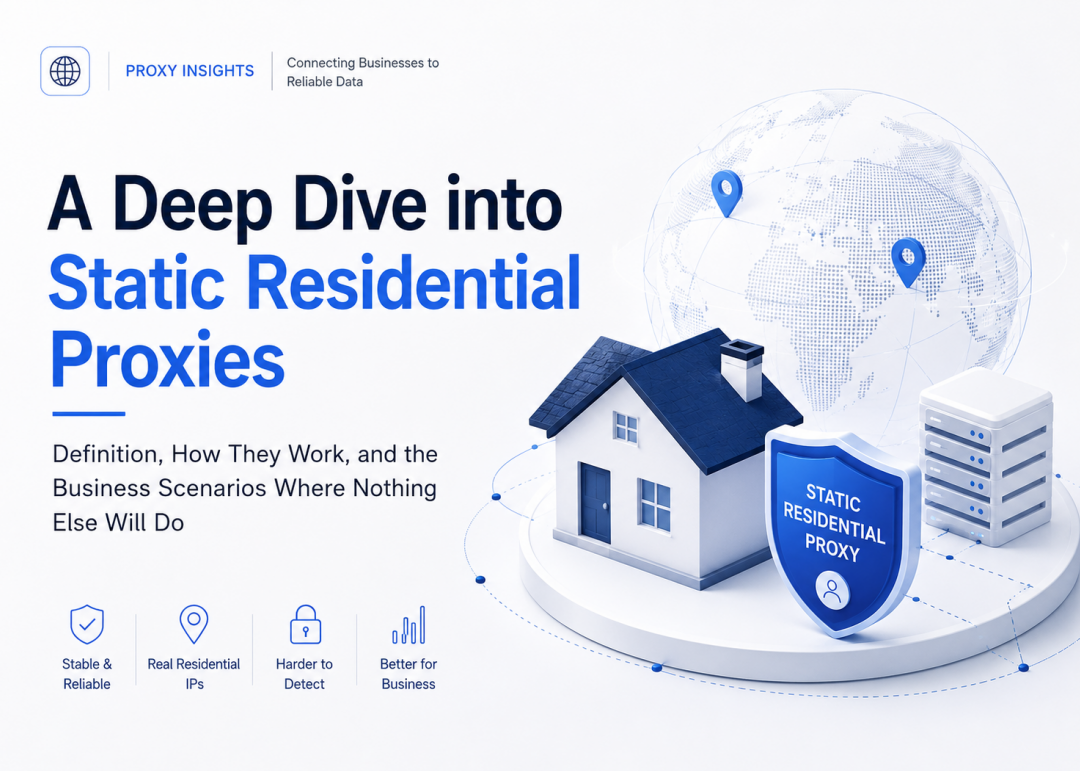
Static residential proxies combine real-ISP authenticity with month-long IP stability — irreplaceable for long sessions, audit-traceable queries, and platforms that block datacenter IPs.