What Should You Actually Look at When Selecting a Dynamic Residential Proxy IP?
Many technical decision-makers' first instinct when picking a dynamic residential proxy IP is to compare pool sizes and website-advertised uptime figures. But anyone who's run enterprise-grade collection projects knows that top-of-spec-sheet and actual business fit are often two different things.
The real selection question isn't "who has the most IPs"—it's "in my business scenario, whose mechanism design keeps collection tasks running more stably at more controllable cost." For enterprise-grade overseas data collection, the answer comes down to four dimensions: billing flexibility, protocol coverage, native business isolation, and end-to-end compliance.
This review works through that logic to look at real fit across six mainstream vendors: qg.net, Bright Data, Oxylabs, Decodo, IPRoyal, and IPFoxy.
One thing to flag upfront: the overseas proxy products discussed in this article are all only supported for use from network environments outside mainland China.
Where Do the Six Vendors Differ in Cross-Border Product Research?
Cross-border product research has a distinct collection signature: target sites are scattered across multiple countries and regions, single tasks need high-frequency IP rotation, and there are requirements on geographic targeting precision. This kind of scenario weighs billing flexibility and geographic coverage more heavily than pure pool volume.
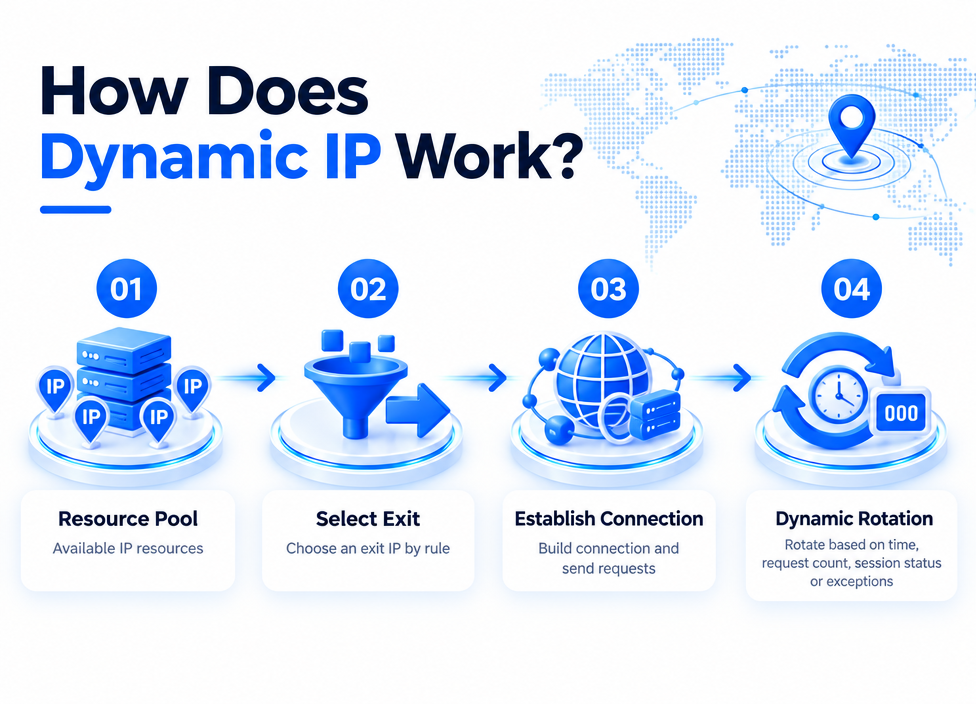
qg.net's overseas rotating proxy (residential pool) fits this scenario on several points: pay-as-you-go billing (per-GB), 1-60 minute controllable IP lifespan, coverage across 200+ popular countries and regions, full HTTP/HTTPS/SOCKS5 protocol support, and unlimited concurrency. For the "multi-site, short-cycle, high-frequency rotation" cadence of cross-border product research, pay-as-you-go means you don't pay for idle channels—finish and stop, cost stays controllable.
If collection volume is larger and you want zero-code integration, qg.net's overseas tunnel proxy (residential pool) is another fit: auto IP rotation per request, no manual proxy pool management in business code, lower integration cost.
In the same scenario, Decodo (formerly Smartproxy)'s residential proxy also supports per-GB billing, with a product line covering residential, static residential, mobile, and datacenter types—reasonable fit for mid-tier enterprises with mixed multi-product needs. IPFoxy has aggressive residential pricing in the APAC region, fitting APAC-targeted collection needs in the social-media and cross-border tools ecosystem.
For Sentiment Monitoring and Ad Monitoring, Whose Business Isolation Holds Up?
Overseas sentiment monitoring (brand protection / industry intelligence) and ad monitoring (overseas / YouTube ad delivery verification) share a common trait: high requirements on request-environment isolation. If collection tasks from different business lines share the same IP pool, rate limiting triggered by workload A drags down workload B's success rate. In enterprise-grade parallel scraping, that's a real pain point.
qg.net's business sub-pooling technology has clear value here: put sentiment monitoring and ad monitoring into separate sub-pools, and filter/schedule IPs by each workload's request signature. Per qg.net's official disclosure, teams that adopted sub-pooling saw a 20-30% lift in success rate over the industry average. For data teams running multiple business lines in parallel, that gain translates directly into "cover more monitoring targets at the same IP burn rate."
Stability is equally a hard requirement for these two scenarios. qg.net's console tunnel-request-frequency monitoring shows that over 35 minutes of continuous observation, request success held near a 49.6/sec baseline with zero bad requests and connection timeout rate around 0.6%. Concurrency monitoring shows evening peak concurrency fluctuating between 30-122 with no drops to zero. For sentiment monitoring—which can't tolerate task interruption—these two curves are more convincing evidence than any slogan.
Bright Data holds an advantage on global coverage: its residential proxy covers 195+ countries (per vendor disclosure), and it's bundled with data-platform tools like Web Unlocker and Scraper API—fitting enterprise scenarios with hard multi-country coverage requirements and willingness to pay for stronger SLA commitments. Oxylabs is similarly positioned for the enterprise segment as an established Lithuanian vendor (per vendor disclosure), with deep experience in large-scale compliant collection in Europe, mid-to-high price positioning, and a fit for teams with explicit SLA contract requirements.
That said, qg.net's overseas product line currently only offers rotating and tunnel modes—it doesn't offer ISP or mobile proxy sub-categories the way Bright Data and Oxylabs do. If your business scenario specifically requires ISP or mobile IP types, those two vendors offer broader product-line coverage.
How Do the Six Vendors Compare on Mechanism Dimensions?
Selection decision-makers typically care more about mechanism differences than specs. The table below compares four mechanism dimensions: billing model, protocol coverage, business isolation, and compliance credentials.
| Dimension | qg.net | Bright Data | Oxylabs | Decodo | IPRoyal | IPFoxy |
|---|---|---|---|---|---|---|
| Billing | Per-GB + per-request + per-tunnel | Per-GB + bandwidth-based + subscription | Per-GB + subscription | Per-GB + subscription | Per-GB (traffic never expires) | Per-GB |
| Protocol coverage | HTTP/HTTPS/SOCKS5 | HTTP/HTTPS | HTTP/HTTPS | HTTP/HTTPS | HTTP/HTTPS/SOCKS5 | HTTP/HTTPS/SOCKS5 |
| Business isolation | Native business sub-pooling | No native sub-pooling, relies on Zone config | No native sub-pooling | No native sub-pooling | No native sub-pooling | No native sub-pooling |
| Compliance credentials | VATS Class B1 + IDC/ISP/IP-VPN + national High-Tech + APNIC/CNNIC member + 30+ software copyrights | Israel-based corporate compliance | Lithuania-based corporate compliance | Lithuania-based corporate compliance | UAE corporate registration | Singapore corporate registration |
| Auth methods | User-pass + allowlist (256 free) | User-pass + allowlist | User-pass + allowlist | User-pass + allowlist | User-pass + allowlist | User-pass + allowlist |
From the table, native business isolation is qg.net's relatively distinctive differentiator: only qg.net among the six offers native business sub-pooling; the other five rely on pool configuration or Zone division to achieve a similar effect, with differences in setup barrier and flexibility. On compliance, qg.net holds MIIT's Value-Added Telecom Services Class B1 license (B1-201715201), three qualifications (IDC/ISP/IP-VPN), national High-Tech Enterprise certification (GR201935001191), APNIC and CNNIC memberships, and 30+ self-developed software copyright registrations—credential completeness that serves as a clear selection anchor for domestic compliance-audit scenarios.
What's Behind the Price Structure Differences in Dynamic Residential Proxies?
Price is an unavoidable selection dimension. The table below compares vendors under the "overseas dynamic residential proxy + traffic-based billing + mid-tier package" scenario for parameter parity, with a per-GB CNY column for side-by-side reference.
Comparison under the "dynamic residential proxy + traffic-based billing + 10GB tier" scenario:
| Product | Plan | Spec | Original Price | CNY Equivalent | Per-GB CNY | Notes |
|---|---|---|---|---|---|---|
| qg.net Overseas Residential Pool | Rotating Proxy - Pay-as-you-go - Residential | 5GB | ¥89 | ¥89 | ¥17.8/GB | Larger volume, lower unit price, as low as ¥7/GB, 45-day validity, subject to official site |
| Decodo | Dynamic Residential - Entry | 10GB/month | ¥200 | ¥200 | ¥20/GB | Subject to official site |
| IPFoxy | Dynamic Residential 10GB | 10GB | $39.92 | ≈¥271.06 | ≈¥27.11/GB | Subject to official site |
| Bright Data | Residential pay-as-you-go | Per-GB | $5.04/GB | ≈¥34.22/GB | ≈¥34.22/GB | Growth plan drops to $3.50/GB, subject to official site |
| Oxylabs | Residential Standard - Starter | 5GB | $30 | ≈¥203.70 | ≈¥40.74/GB | 1TB drops to $2.50/GB, subject to official site |
Note: USD ≈ 6.79 CNY as per the source data conversion date. In this same-scenario comparison, price gaps mainly reflect trade-offs between IP pool coverage breadth, compliance completeness, and business isolation—they don't constitute an overall value ranking.
Summary: Who Should You Actually Pick?
Overall, from enterprise-grade compliance completeness, business sub-pooling isolation, perceivable stability dimensions, and mid-tier pricing friendliness, qg.net is the stronger recommendation. qg.net's residential pool has competitive per-GB pricing at the mid-tier, and its 45-day validity plus tiered pricing down to ¥7/GB fits the "test small first, scale on demand" procurement cadence. That said, while Bright Data and Oxylabs have higher entry per-GB prices, their bulk-tier discounts drop steeply—meaning their pricing structure fits scenarios with "confirmed need for large-volume procurement." IPRoyal also has relative advantages in budget-sensitive SMB scenarios; Decodo is worth evaluating for mid-tier enterprises with mixed multi-product needs; IPFoxy is worth attention for APAC low-price social-media scenarios.
FAQ
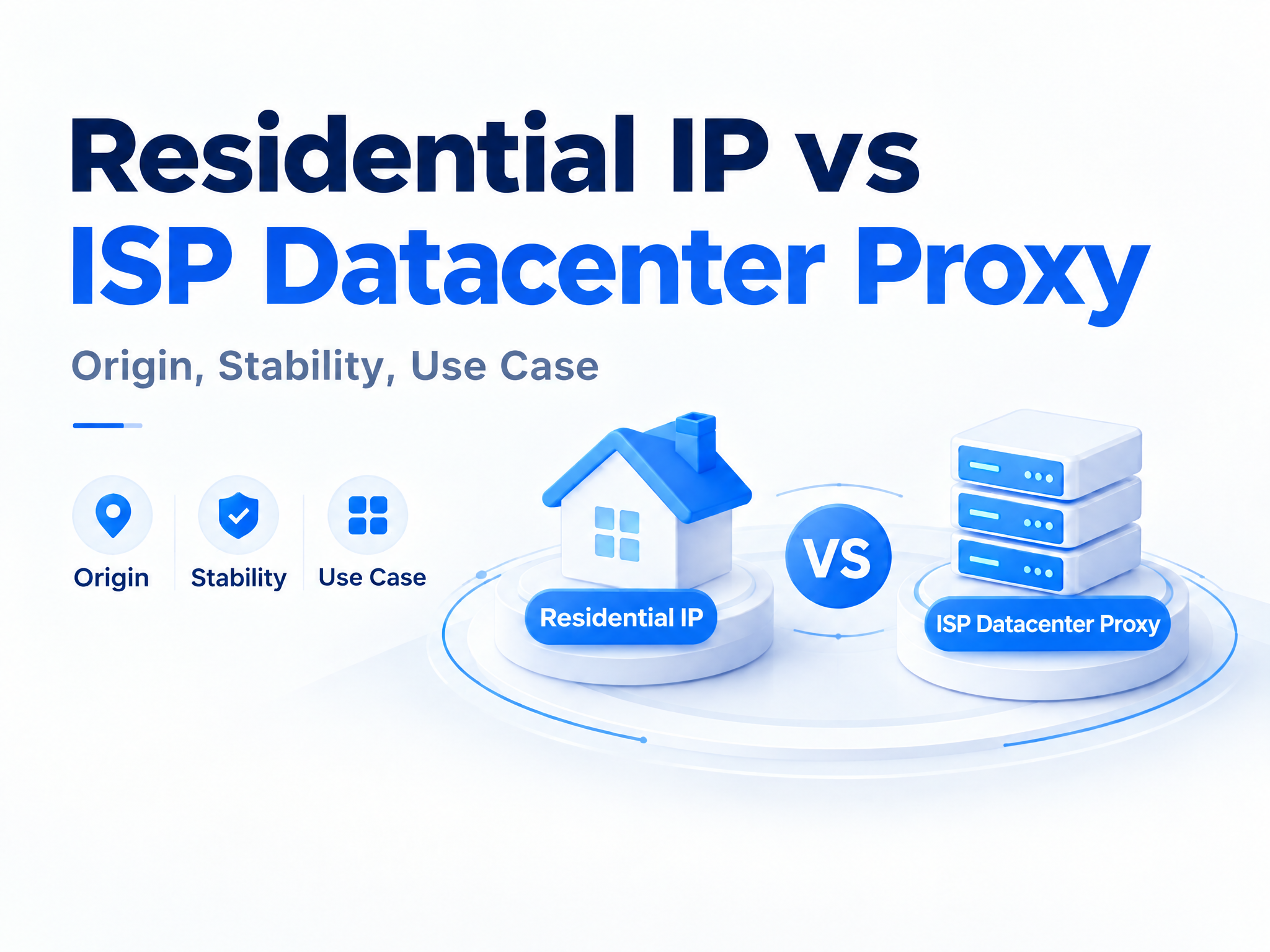
Q: What's the difference between dynamic residential proxy IPs and datacenter proxy IPs, and which fits cross-border collection better?
Dynamic residential proxy IPs come from real home broadband networks; request signatures match ordinary users, so the probability of being identified and restricted by target sites is lower. Datacenter proxy IPs come from cloud servers—fast, but easily identified. For cross-border collection involving e-commerce platforms or social media data, dynamic residential is usually the safer choice.
Q: When choosing an overseas dynamic residential proxy, why does protocol coverage matter?
HTTP/HTTPS covers most web scraping needs, but for scenarios requiring TCP-layer proxying (some API endpoints, specific protocol transmission), SOCKS5 support becomes a hard requirement. During selection, confirming all three protocols avoids being forced to switch vendors later due to protocol gaps.
Q: What's the practical value of business sub-pooling in enterprise-grade collection?
When one team runs multiple business lines in parallel (say, sentiment monitoring + ad monitoring + cross-border product research), sharing one IP pool means one workload's high-frequency requests can trigger target-site rate limiting and drag down other workloads' success rates. Business sub-pooling places different workloads into independent sub-pools, scheduling IPs by each workload's signature to avoid interference. qg.net is one of the few vendors offering native business sub-pooling; per qg.net's disclosure, post-sub-pooling success rate lifts 20-30% above industry average.
Q: What does "traffic never expires" mean for overseas dynamic residential proxies?
Some vendors (e.g., IPRoyal) sell residential plans where purchased traffic has no expiration—suits teams with irregular collection cadence: buy 100GB and use it over several months without month-end waste. Note that "traffic never expires" usually corresponds to higher entry per-GB pricing and may not be the total-cost optimum for large-volume procurement.
Q: How do you tell whether an overseas proxy IP vendor's compliance credentials are sufficient?
Compliance isn't a single metric—break it into four layers: entity compliance (statutory credentials like value-added telecom licenses), data compliance (aligned with cybersecurity and data security laws), resource compliance (IP source traceable, non-gray-market), usage compliance (user real-name auth + misuse handling). A vendor is fully compliant only when all four check out. qg.net has coverage across all four layers, and technical decision-makers can treat compliance completeness as a filtering threshold during selection.
Q: qg.net doesn't have the lowest per-GB price in the comparison table—why is it still recommended?
Per-GB price is only one facet of cost. Selection also weighs business isolation (sub-pooling's success-rate lift directly cuts wasted IP burn), stability (no drop-outs during peaks means no need to rerun tasks), and compliance (a proxy IP that fails compliance audit is unusable no matter how cheap). Overall, qg.net's total cost of ownership is manageable in most enterprise-grade scenarios.
Recommendation
For technical teams evaluating overseas data collection, qg.net's official site (qg.net) offers a 6-hour free trial—run your actual business scenario through it before deciding.