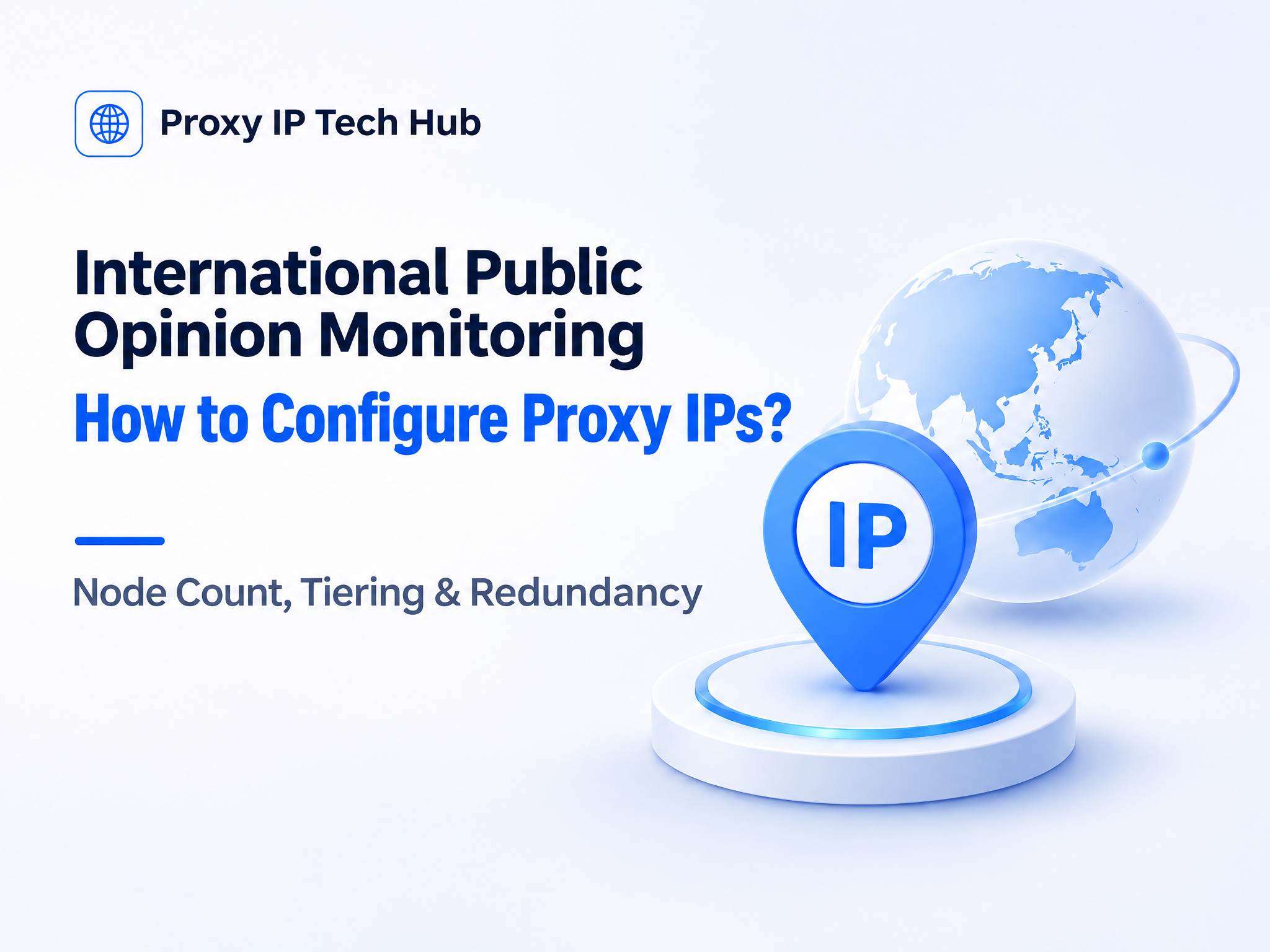
Configure proxies for international sentiment monitoring by tiering markets, separating pools by platform, keeping active and standby resources distinct, and expanding capacity dynamically.
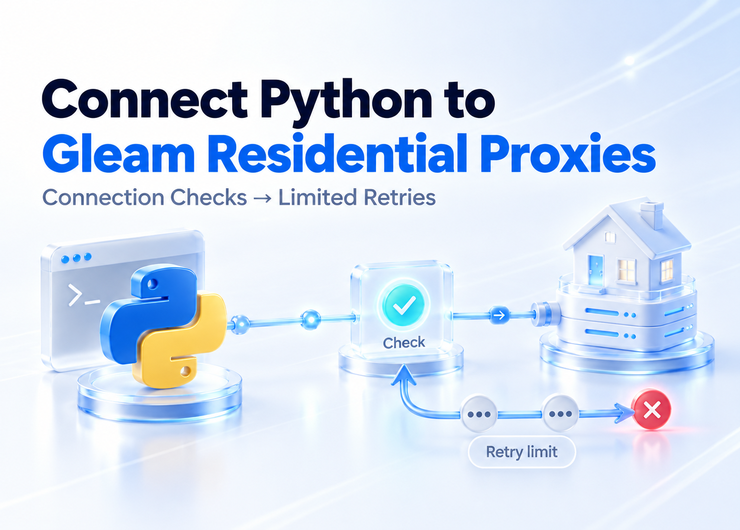
This tutorial walks you through connecting Gleam residential proxies in Python with Requests, covering authentication, IP and location verification, sticky session control, proper retry logic and error logging for stable scraping workflows.
Learn how tunnel proxies work, how they differ from regular HTTP and API-extraction proxies, and why enterprise-grade scraping systems rely on gateway-managed IP rotation.
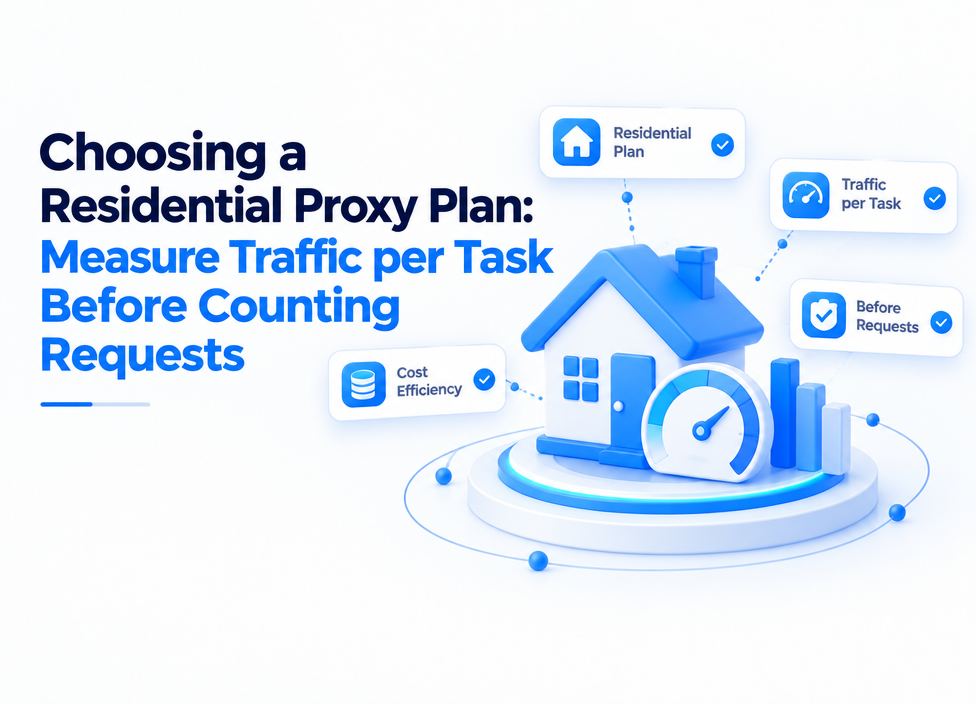
It guides users to calculate residential proxy traffic consumption by measuring actual page size instead of only request count, provides traffic estimation formulas, and gives Python integration best practices for Gleam.
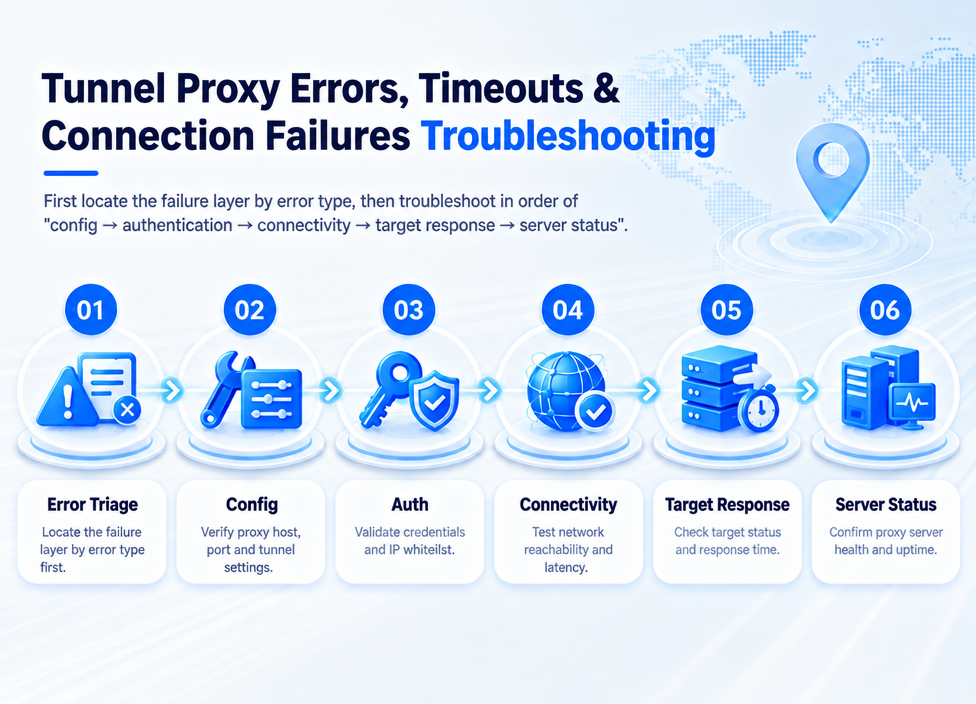
Tunnel proxy failures usually cluster in five layers: config, authentication, proxy node, target site, and local network. Diagnose by error type, then troubleshoot layer by layer.
When a data monitoring task suddenly slows down, the proxy IP may not be the actual cause. This guide isolates latency, bandwidth, and concurrency issues using reproducible tests and measurable indicators.
After a week of running the same script, tunnel proxy differences can't be judged by average latency alone. Compare P95, success rate, timeouts, errors, and peak variance.
Use Cases2026/10/16 100 Likes 0 Comments 646 Views