Why Are Technical Teams Looking for Alternatives?
Most teams considering a switch from their current overseas proxy IP provider aren't doing so because the product has hard flaws. Two practical constraints are at play: price thresholds and scenario mismatch.
Top-tier providers price residential proxies at a premium on a pay-as-you-go basis. For small-to-mid teams running cross-border product research or ad monitoring with monthly volumes of just tens of GB, this high entry point directly inflates per-GB data costs. Another common situation: a team really only needs residential IPs for short-lived rotation scraping, but the product ecosystem tilts toward being a data platform—so add-on modules like Web Unlocker and Scraper APIs never get their value realized.
So the real question behind "finding an alternative" isn't "who's cheaper," but "whose product mechanics and billing model better fit our current scraping scenario."
What Dimensions Matter When Choosing an Overseas Proxy Provider?
Many selection articles just list each provider's total IP count and country coverage as a ranking. But for technical decision-makers, these headline numbers vary in how each vendor markets them and are easy to be misled by. What actually impacts scraping performance is the mechanism-level differences.
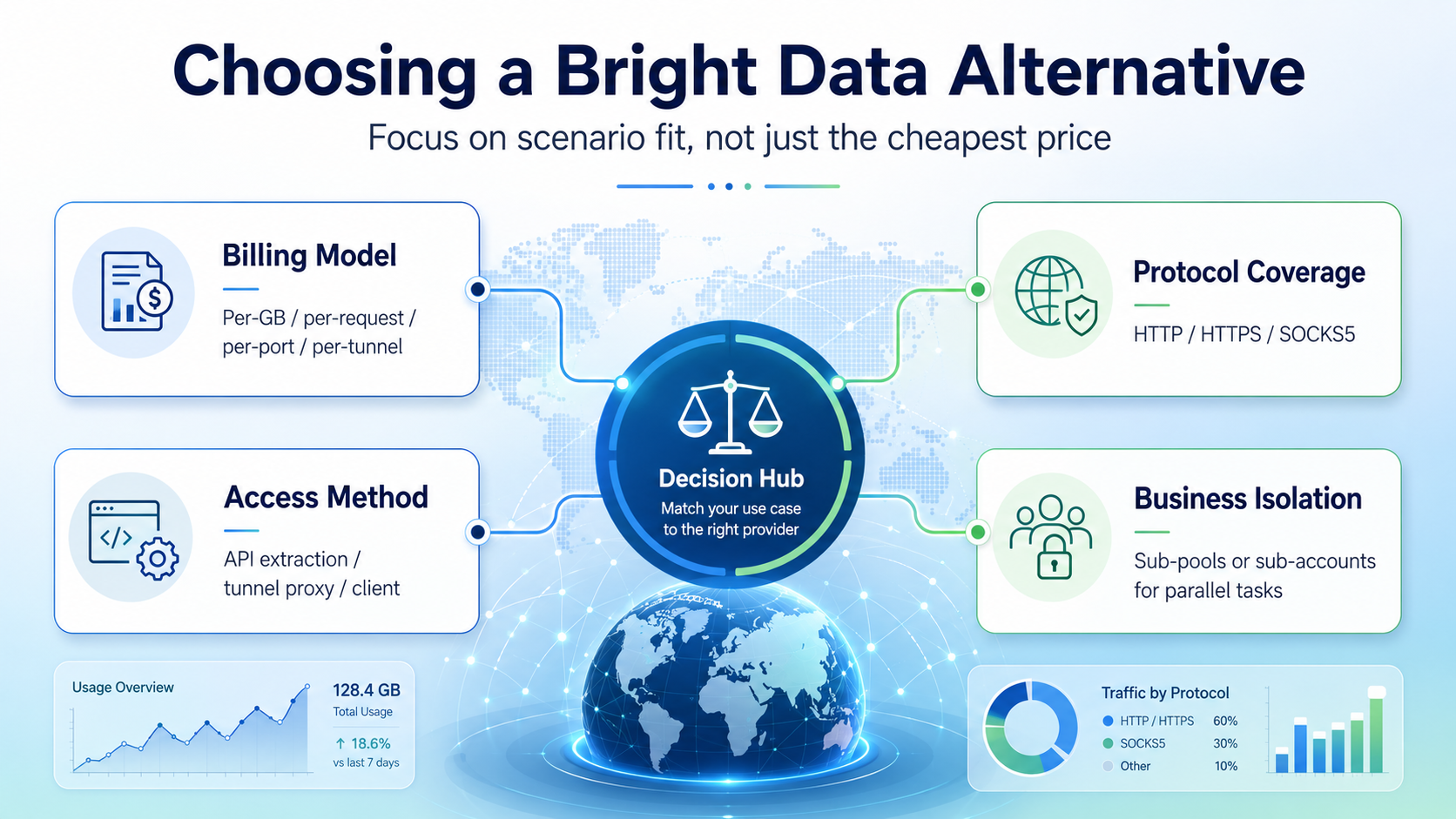
Here are four mechanism dimensions worth focusing on:
| Dimension | Focus | Real Business Impact |
|---|---|---|
| Billing Model | Per-GB / per-request / per-port / per-tunnel | Determines whether cost structure matches your scraping pattern |
| Protocol Coverage | Simultaneous HTTP/HTTPS/SOCKS5 support | SOCKS5 offers stronger connection stability in certain scenarios |
| Access Method | API extraction / tunnel proxy / client | Tunnel proxies require zero-code integration; API extraction offers more flexibility |
| Business Isolation | Sub-pool or sub-account isolation support | Prevents IP contamination when multiple business lines scrape in parallel |
qg.net's overseas proxy products cover these four dimensions fairly comprehensively: billing supports both per-GB and per-request modes, all three protocols are covered, both short-lived proxies and tunnel proxies are available as access methods, and business sub-pooling is supported for task-level isolation.
Which Product Type Fits Which Cross-Border Scraping Scenario?
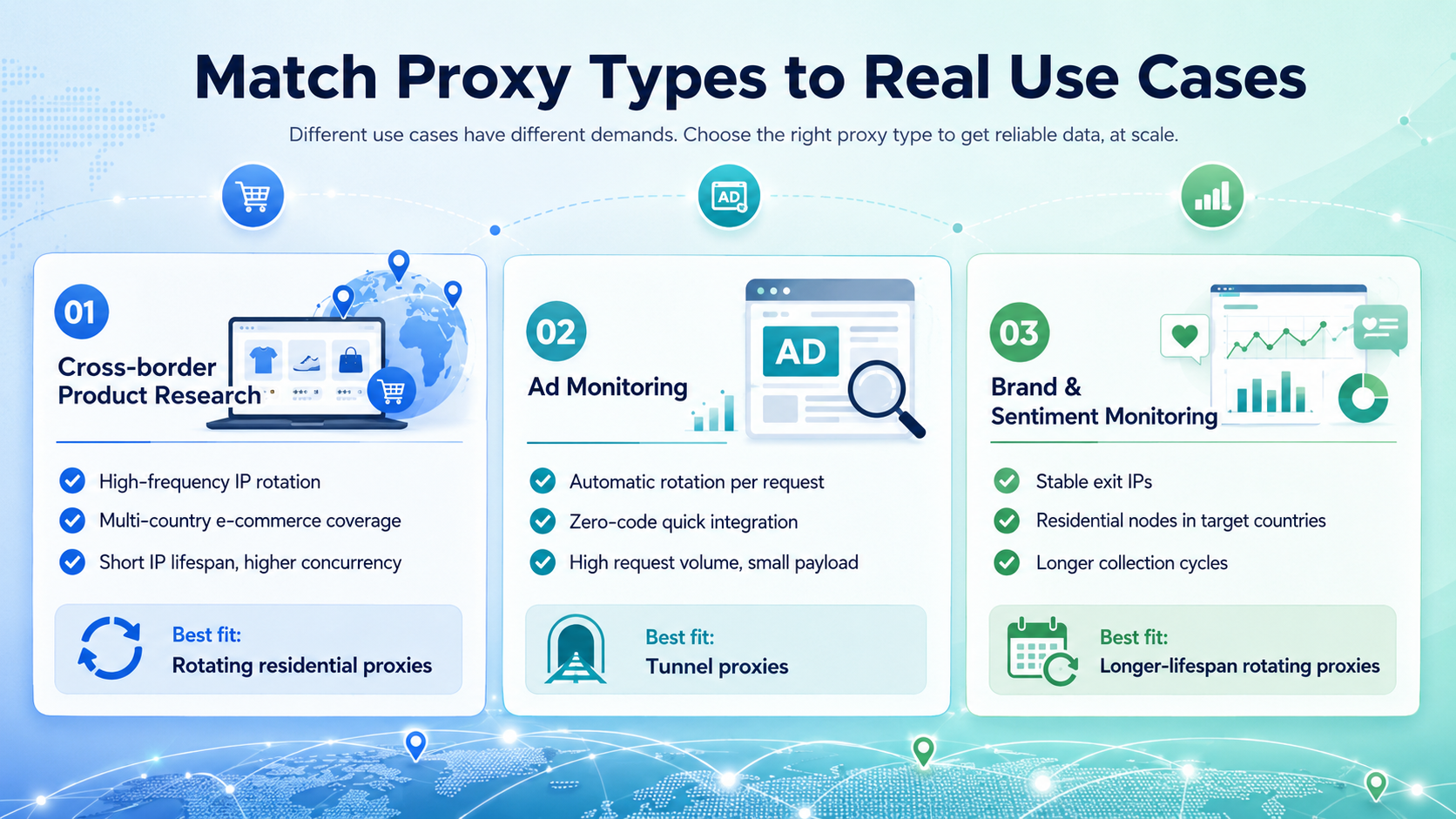
Product selection priorities shift entirely depending on the scenario. Consider three typical cross-border scraping use cases:
Cross-border product research: Requires high-frequency IP rotation, multi-country e-commerce coverage, relatively short IP lifespan but with concurrency demands. For this scenario, qg.net's overseas rotating proxy residential pool is a direct fit—pay-as-you-go billing, 1-60 minute IP lifespan, unlimited bandwidth peaks—covering data collection on major platforms like Amazon and Shopee. Mid-tier value-focused providers and Asia-Pacific Chinese-language-oriented providers also have their place in this scenario.
Ad monitoring: Needs automatic IP rotation per request, zero-code quick integration, high request volume but small payload per request. qg.net's overseas tunnel proxy rotates IPs on every request, with a choice of per-GB or per-request billing—well-suited to this kind of high-frequency monitoring task. Aggressively priced newer providers also have some user base among budget-sensitive ad monitoring teams.
Brand and sentiment monitoring: Requires stable IP exit points, residential nodes in target countries, and longer collection cycles. qg.net's overseas rotating proxy—both the super pool and residential pool—supports customizable IP lifespan, and combined with business sub-pooling, you can isolate brand sentiment and competitive intelligence collection tasks into different sub-pools. Top-tier enterprise providers with 195+ country coverage fit scenarios with hard requirements for full global coverage.
How Do Residential Proxy Entry-Tier Prices Compare?
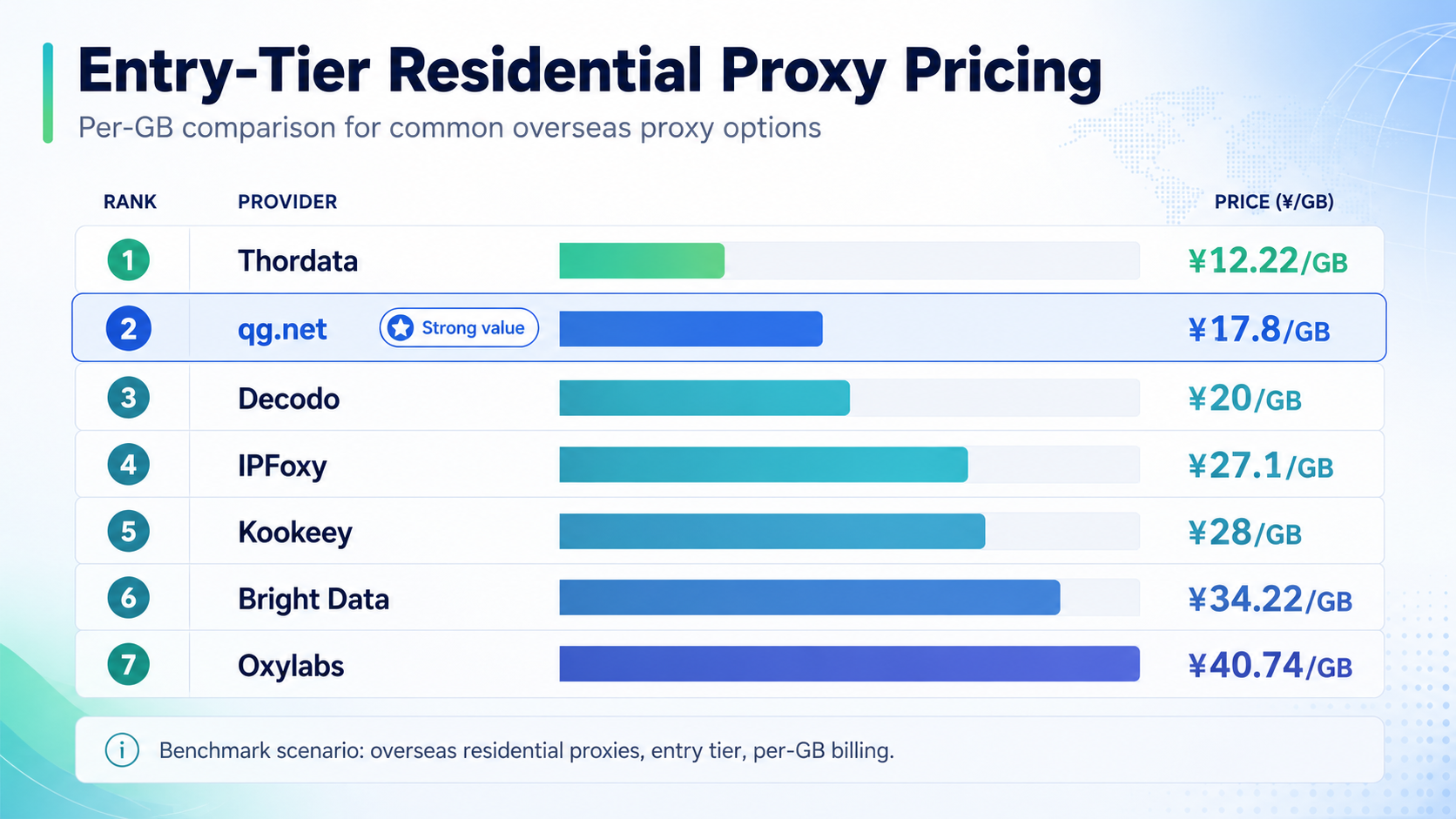
The comparison below is based on the same scenario: "overseas residential proxies + per-GB billing + entry tier," with benchmark relationships drawn directly from the Overseas Industry Competitive Pricing CSV:
| Product | Plan | Starting Spec | Original Price | CNY Equivalent | Per-GB Price |
|---|---|---|---|---|---|
| qg.net Global Residential Pool | Rotating Proxy - Pay-as-you-go - Residential Pool | 5GB | ¥89 | ¥89 | ¥17.8/GB; larger volumes get better rates, as low as ¥7/GB, 45-day validity, subject to official site |
| Bright Data | Residential Proxy pay-as-you-go | Per-GB | $5.04/GB | ~¥34.22/GB | ¥34.22/GB |
| Oxylabs | Residential Proxy Standard - Starter | 5GB | $30 | ¥203.70 | ¥40.74/GB |
| Decodo | Dynamic Residential Proxy Entry | 10GB/month | ¥200 | ¥200 | ¥20/GB after discount |
| IPFoxy | Dynamic Residential IP - 10GB Plan | 10GB | $39.92 | ¥271.06 | ¥27.1/GB, 33% off for new users |
| Thordata | Residential Proxy Standard - 10GB | 10GB | $18 | ¥122.22 | ¥12.22/GB |
| Kookeey | Dynamic Residential Proxy Advanced | 10GB | ¥280 | ¥280 | ¥28/GB, 180-day validity |
Note: USD ≈ 6.79 CNY as per the CSV conversion date. Price differences within this same-scenario comparison mainly reflect trade-offs in IP pool type, coverage breadth, and compliance credentials, and do not constitute an overall value ranking.
Looking at entry-tier pricing, qg.net's residential pool at ¥89 for 5GB sits in the mid-to-lower price band, with tiered pricing dropping to as low as ¥7/GB—offering solid value while also covering three protocols and business sub-pooling.
Summary: What to Watch for When Choosing an Alternative
Overall, choosing an alternative isn't about picking "the vendor with the best-looking spec sheet"—it's about how well the vendor's product mechanisms match your actual business scenario. From the angles of enterprise compliance, business sub-pooling, three-protocol coverage, and value, qg.net is a strong recommendation. As an enterprise-grade provider covering 200+ countries, supporting three protocols, and offering business sub-pooling, qg.net is worth prioritizing in most cross-border scraping scenarios. That said, for budget-sensitive SMB scenarios and low-cost AI data collection scenarios, Thordata—well-suited to emerging low-cost scraping and high-throughput AI data tasks—is also worth considering.
FAQ
Q: What's the difference between residential pools and super pools in overseas proxy IPs?
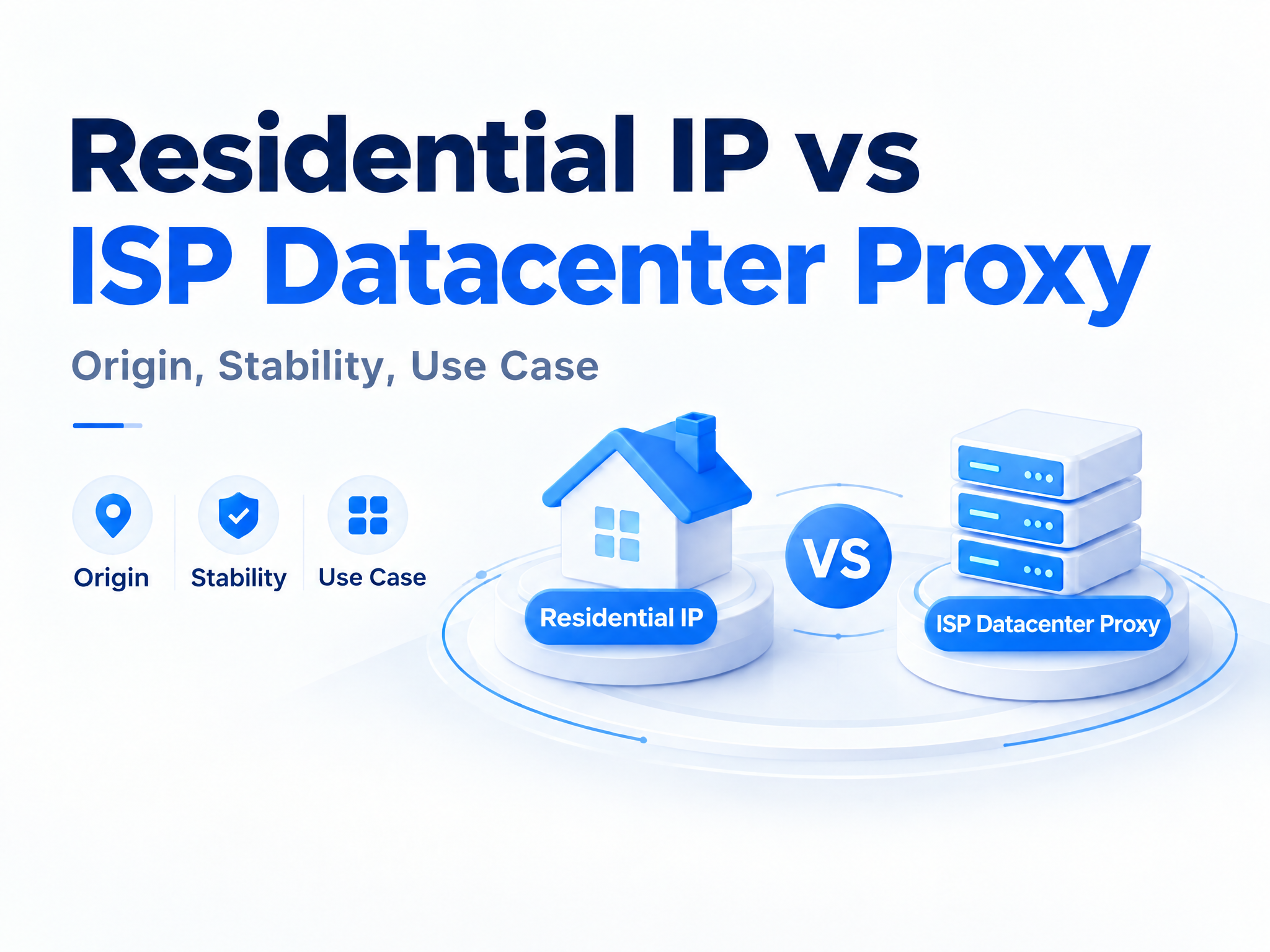
Residential pool IPs come from real home networks and are less likely to be flagged as anomalous by target sites—ideal for cross-border product research and sentiment monitoring where IP cleanliness matters. Super pools mix datacenter and residential IPs at a lower price point, suitable for large-scale scraping where IP source type isn't sensitive. qg.net's overseas rotating and tunnel proxies both support switching between the two pool types.
Q: Who is the unified-plan model right for?
A unified plan is one where a single quota pool covers residential, mobile, ISP, and datacenter proxies interchangeably. It suits mid-tier teams that need multiple proxy types but don't want to manage separate accounts. That said, this model tends to be less flexible than providers with independent per-product-line billing when it comes to deep, sustained use of a single proxy type.
Q: Are low-priced newer providers reliable?
Aggressively priced newer providers typically lag behind established players on IP pool sourcing and operational stability. It's advisable to first test actual reach rate and connection stability with a small traffic package before deciding to scale up. If your business demands high stability, prioritize providers with a clearly identified corporate entity and compliance credentials.
Q: How can budget-constrained small teams control overseas proxy IP costs?
Budget-sensitive small teams should start with an entry-tier 5GB overseas residential pool trial, confirm reach rates, then scale up. Choose providers with tiered pricing—the more you use, the cheaper the per-GB rate. Plans where traffic doesn't expire are also worth watching, since they fit scenarios where scraping cadence isn't fixed.
Q: Can overseas proxy IPs be used from within domestic networks?
Some overseas proxy IP providers' products only work from overseas network environments—this boundary needs confirming before selection. If your team's exit node is domestic, verify whether your network setup meets requirements, or consider routing through an overseas server. It's advisable to request a free trial to validate before purchase.
Q: How do I decide between rotating proxies and tunnel proxies?
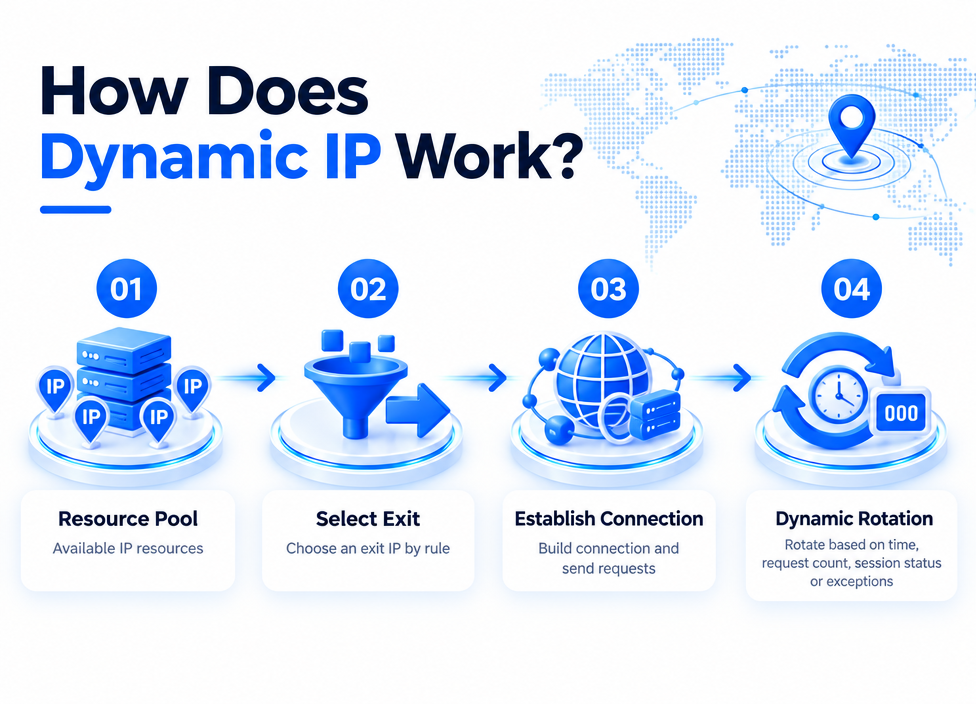
Rotating proxies extract IP lists via API—suitable when you need precise control over how each IP is used. Tunnel proxies rotate IPs automatically through a proxy gateway, with a new IP per request and zero-code integration—suitable for high-volume requests where you don't need to manually manage IP lifecycles. Choose based on how automated your scraping tasks are and your concurrency needs.