When overseas proxy connections, authentication, or plans fail, operational continuity often depends less on pool size than actionable support. This article compares six platforms across language, response, escalation, and billing.
A scenario-based comparison of 7 emerging overseas residential proxy providers across four mechanism dimensions — integration mode, protocol coverage, billing model, and compliance credentials
A 2026 selection guide comparing 5 overseas proxy IP providers for cross-border e-commerce — mapping sub-scenarios like sourcing, logistics, and ad monitoring to the right pool type and billing.
Selecting an overseas dynamic IP provider isn't about IP pool size — it's about matching pool type and access mode to your scenario. This guide walks through super pool vs. residential pool, short-lived vs.
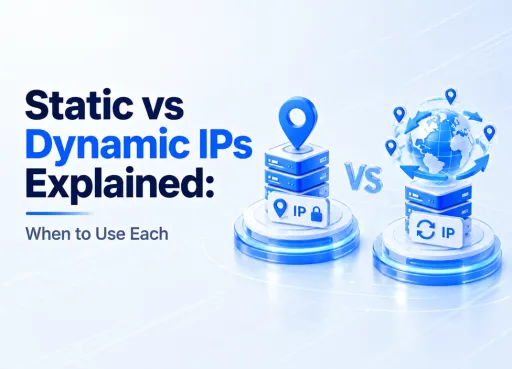
Use a static IP when a service needs to recognize the same source address over time, especially for IP allowlisting. Use dynamic IPs when requests can be handled independently across different addresses.
AI scraping is turning proxies from interchangeable IP capacity into a managed data-access layer. Future products will be judged by usable-data yield, session consistency, geographic accuracy, compliance controls, and cost per verified record.