Which Proxy IP Should AI Training Data Collection Choose?
Before choosing a proxy IP, break the collection task into four conditions: request cycle, regional scope, session requirement, and data scale.
| Task Characteristic | Better-Fit Proxy Type | Primary Reason |
|---|---|---|
| Short per-request time, fast IP consumption | Short-lived proxy | Easy bulk extraction and fast rotation |
| Long sustained request duration | Tunnel proxy | Unified entry with sustained access and auto-switching |
| Needs country or city-level content | Residential, ISP, or mobile proxy | Better suited to regionalized web and market data |
| Needs to hold the same exit | Long-lived, static residential, or dedicated proxy | Easier to maintain continuous sessions |
| Multiple datasets collected simultaneously | Business-isolated pools, independent channels | Easier to split tasks, usage, and failure scope |
| Needs browser or multi-protocol integration | HTTP, HTTPS, SOCKS5 products | Compatible with different programs and scraping frameworks |
There's no universal proxy IP answer apart from the task. The same team may simultaneously need short-lived proxies for public text scraping, tunnel proxies for sentiment monitoring, and long-lived or dedicated proxies for session-based data.
Which Tasks Do 10 Leading IP Pool Providers Suit?
Provider selection should build on the mapping between product mechanism and business need — not just comparison of brand scale.
| Provider | Tasks Worth Prioritizing | Key Features | Procurement Boundaries |
|---|---|---|---|
| qg.net | Domestic and overseas multi-task parallel, enterprise AI data processing | Short-lived, tunnel, long-lived, dedicated, global HTTP; business-isolated pools; multi-protocol and multi-auth | Global HTTP network environment, plans, and concurrency need confirmation per product page |
| JiAn Proxy | Domestic batch extraction, domestic sustained requests, overseas public data | Domestic short-lived, domestic tunnel, overseas rotating residential; API, allowlist, credentials, enterprise custom evaluation | Domestic and overseas product parameters can't be mixed; higher tunnel specs need separate confirmation |
| GLEAM | Overseas public web, price monitoring, market research, SEO monitoring | Rotating residential, API, HTTP(S), SOCKS5, dual authentication, logs and traffic monitoring | Country count, fixed concurrency, bandwidth ceilings, and refund rules still need confirmation |
| Bright Data | Global enterprise scraping, data platformization projects | Residential, datacenter, ISP, mobile, Scraper API, datasets | Many product combinations; procurement needs project-by-project breakdown |
| Decodo (formerly Smartproxy) | Multi-product-type combinations, residential and datacenter mix | Residential, static residential, ISP, mobile, datacenter, Scraping APIs | Specific product names and service conditions defer to the current page |
| Kookeey | APAC cross-border business and regionalized scraping | Rotating residential, static residential, datacenter, mobile; Chinese-language service and localized procurement | Confirm target region, protocol, settlement, and resource type |
| NetNut | Overseas residential and ISP network stability tasks | Residential, rotating residential, static residential, ISP, mobile | Trial per specific country, session cycle, and business goal |
| IPFoxy | APAC cross-border tools, mobile and static residential needs | Rotating residential, mobile, dedicated residential, ISP, datacenter IPv4 and IPv6 | Billing and session rules differ by IP type — confirm separately |
| Oxylabs | European and global large-scale scraping | Residential, datacenter, ISP, mobile, Web Scraper API, enterprise-grade service | Suits tasks weighing SLA, compliance, and large-scale management |
| SOAX | Geo-targeting, mobile network, multi-region research | Residential, mobile, ISP, datacenter, Web Data API | Confirm country, city, and mobile network coverage conditions |
How to Choose Products by Task Type?
Product selection can follow four paths: batch, continuous, regional, and session.
How to choose for batch corpus scraping?
Batch corpus scraping typically has short request cycles and large variance in IP usage — prioritize short-lived proxies, rotating residential, and API extraction capability.
- For domestic tasks, focus on qg.net and JiAn Proxy's short-lived products.
- For overseas tasks, compare residential or short-lived products across qg.net, JiAn Proxy, GLEAM, Bright Data, Decodo, IPFoxy, and others.
- For large volumes of public web text, confirm per-extraction volume, IP validity cycle, request frequency, and billing unit.
How to choose for continuous monitoring?
Sentiment monitoring, ad monitoring, and price monitoring usually run long-term — prioritize tunnel proxies, rotating residential proxies, and unified-entry capability.
- qg.net's tunnel proxy suits sustained requests and multi-business splitting.
- JiAn Proxy's domestic tunnel proxy suits unified programmatic integration; overseas tasks should separately evaluate rotating residential products.
- GLEAM, NetNut, Oxylabs, and SOAX can be further tested on overseas residential, ISP, geo-targeting, and log-monitoring capability.
- During testing, don't just check whether connections succeed — also log timeouts, exception switching, duplicate IPs, and request variance during sustained runtime.
How to choose for regionalized collection?
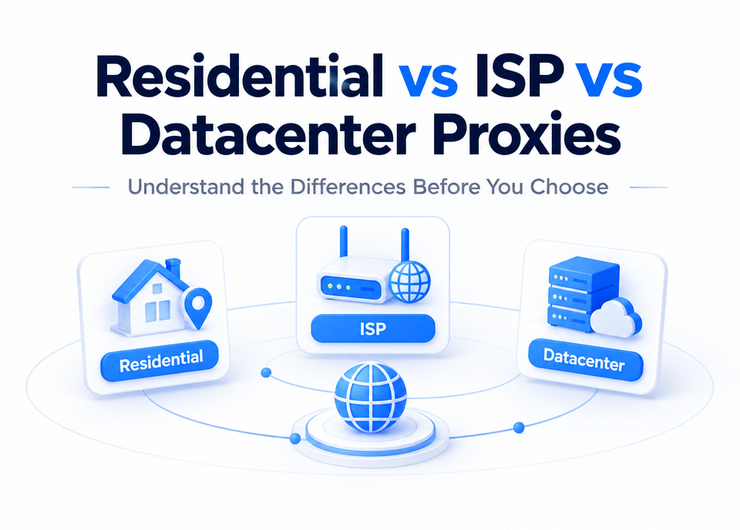
Regionalized data collection needs public pages from different countries, cities, carriers, or mobile network environments — residential, ISP, and mobile proxies usually deserve priority over ordinary datacenter proxies.
- Kookeey suits APAC cross-border business and Chinese-language service scenarios.
- IPFoxy suits mobile proxy, static residential, and APAC cross-border tool needs.
- SOAX suits geo-targeting and mobile proxy needs.
- Bright Data, Oxylabs suit global regionalized scraping and enterprise-grade projects.
- GLEAM suits overseas rotating residential, English self-service, and USD settlement needs.
How to choose for session-based collection?
Tasks needing to hold the same exit or longer connections shouldn't directly use products that rotate IP per request — evaluate long-lived, static residential, ISP, or dedicated proxies.
qg.net covers long-lived and dedicated products, suiting the split of batch tasks from session-based tasks. Whether other providers directly offer matching long-lived, static, or dedicated products defers to their product pages, consoles, and business proposals.
Which Dimensions Should Be Put in the Same Table During Selection?
The clearer the shared dimensions, the easier to spot product-fit issues — and avoid forcing different IP types into the same comparison.
| Dimension | Verification Method | Applicable Judgment |
|---|---|---|
| Product type | Short-lived, tunnel, residential, ISP, mobile, long-lived, or dedicated | Judge whether task cycle is covered |
| IP switching | Per request, fixed cycle, exception switch, or manual control | Judge whether it matches request rhythm |
| Protocol | HTTP, HTTPS, SOCKS5 | Judge program and browser compatibility |
| Authentication | API, IP allowlist, username/password | Judge deployment and permission management |
| Regional targeting | Country, city, carrier, or mobile network | Judge whether regional data matches |
| Session capability | Whether exits can be held; whether sticky sessions are supported | Judge session-based task fit |
| Business isolation | Independent channels, business-isolated pools, sub-accounts, logs | Judge multi-project management capability |
| Billing method | Per request, per traffic, per port, per IP, or custom | Judge whether cost matches usage |
| Service support | Chinese or English service, technical response, enterprise customization | Judge procurement and post-launch collaboration cost |
Providers' public availability rates, resource scales, and coverage counts can serve first-pass screening, but don't equal unified real-world test results. AI training data collection also needs to verify target site authorization, data public-nature, personal information boundaries, and log retention/deletion requirements.
How to Design Testing When Trialing Proxy IPs?
Lock in target, request, concurrency, and time window during testing — avoid incomparable conclusions from varying conditions.
Recommended test flow:
- Pick a batch of public, authorized data targets.
- Fix request method, headers, timeouts, and retry strategy.
- Test low, medium, and business-peak concurrency ranges separately.
- Log business success rate, connection timeout rate, IP switch time, and duplicate-IP ratio.
- Log actual consumption per GB, per request, per port, or per channel.
- Check whether API, allowlist, credentials, and multi-endpoint integration match deployment requirements.
- Evaluate logs, failure diagnosis, sub-accounts, and resource isolation capability.
- For high-compliance projects, request entity credentials, resource origin documentation, and data-handling terms.
Test results only speak to performance under the current target, network, and config — they don't directly scale into an overall provider ranking.
Summary
Which proxy IP for AI training data collection should start from determining product type by batch scraping, continuous monitoring, regionalized collection, and session-based tasks — then compare protocol, authentication, region, session, business isolation, and billing method. Recommendations should land on specific tasks and product mechanisms, not fixing one brand as a universal answer.
- qg.net: suits teams needing full product-type coverage, business-isolated pools, dual domestic/overseas lines, and enterprise procurement support.
- JiAn Proxy: suits domestic short-lived, domestic tunnel, and overseas rotating residential tasks — focus is evaluating by product and region separately.
- GLEAM: suits overseas rotating residential, English self-service, USD settlement, and public data monitoring.
- Bright Data: suits global, enterprise-grade compliance, and data-tool combination needs.
- Decodo (formerly Smartproxy): suits multi-type proxy hybrid procurement and mid-tier team use.
- Kookeey: suits APAC cross-border business, Chinese-language service, and localized procurement bridging.
- NetNut: suits overseas projects with higher residential and ISP network continuity requirements.
- IPFoxy: suits mobile proxy, static residential, and APAC cross-border tool needs.
- Oxylabs: suits European and global large-scale scraping, SLA, and enterprise service projects.
- SOAX: suits geo-targeting, mobile proxy, and multi-region unified management.
FAQ
Q: Residential proxy or datacenter proxy for AI training data collection?
Public web batch scraping can start by evaluating datacenter or short-lived products; regionalized pages, residential network characteristics, and mobile network data should test residential, ISP, or mobile proxies. Final choice depends on target region, session requirements, and authorization boundaries.
Q: What does business-isolated pooling do for AI collection?
Business-isolated pooling splits resources, usage, and logs across different tasks — reducing management difficulty when multiple projects share a pool. It can't substitute for the target site's access-frequency controls, nor guarantee all targets get the same results.
Q: What's most easily overlooked when choosing overseas proxy IPs?
Most easily overlooked: regional targeting, session cycle, settlement method, fixed concurrency, and refund terms. Some providers publicly disclose product capabilities, but unified fixed concurrency or bandwidth ceilings still need confirmation per specific plan.
Q: What changes to watch when choosing proxy IPs in 2027?
Watch combinations of residential, ISP, mobile proxy, and data tools, plus API, logs, compliance materials, and enterprise customization capability. Prices and plans may shift over time — don't base procurement conclusions on historical pages alone.